

The Gates of Consciousness
The Gates of Consciousness.Part9
Gate Nine. I Live My Presence Author: Soheila Dadkhah Abstract
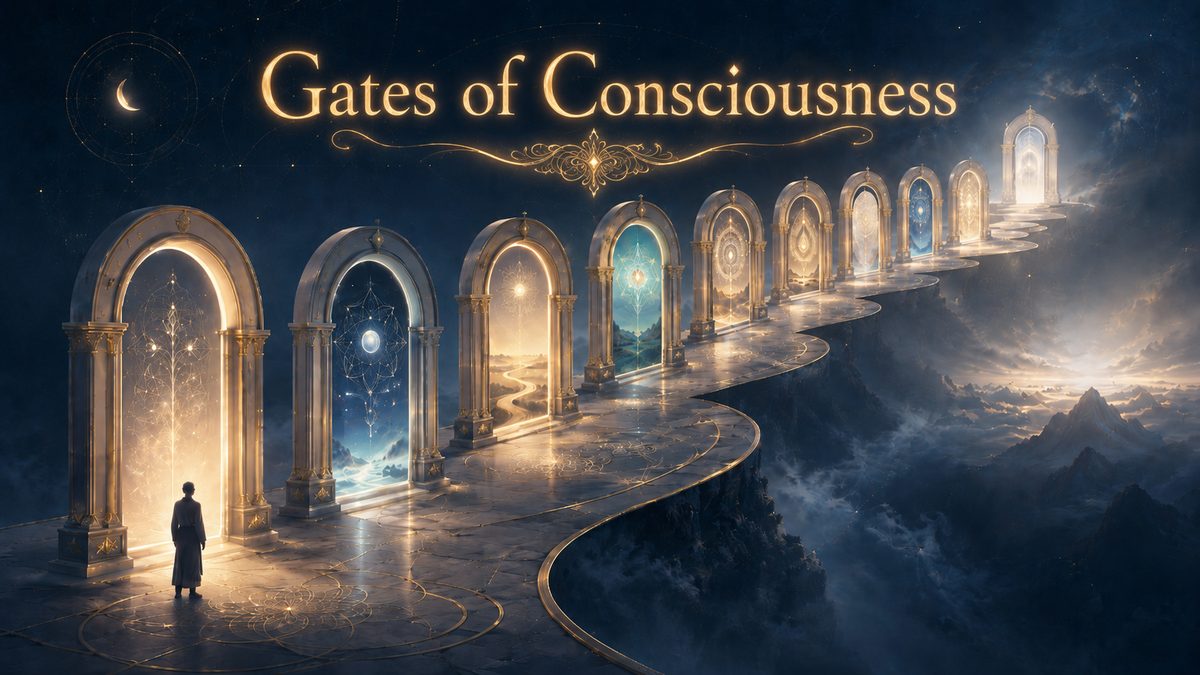
A Psychological and Social Analysis of the Nine Gates of Awareness in the Seromi System
Author: Soheila Dadkhah
Abstract
The Nine Gates of Awareness in the Seromi System present a staged map for describing personal growth, psychological transformation, and relational maturity. This model begins with “I Am” and reaches “I Live My Presence,” where awareness becomes embodied in daily life. Along this path, the human being moves through the foundational experience of presence, emotional contact, activation of the creative force, building stability, seeing patterns, understanding meaning, accepting experience, self-love, and finally living presence.
From a psychological perspective, these nine gates can be examined as a framework for inner growth; a framework connected with concepts such as self-awareness, emotional regulation, meaning-making, acceptance, self-compassion, psychological flexibility, autonomy, inner dignity, and value-aligned action. Contemporary research on mindfulness, self-compassion, emotional regulation, self-determination, and psychological well-being shows that these areas are linked with mental health, personal growth, relationship quality, and social functioning.
From a social perspective, the Nine Gates can contribute to relational maturity, the development of healthy boundaries, reduced reactivity, increased empathy, improved quality of dialogue, and the formation of social responsibility. A person who knows the self more clearly, understands emotions more accurately, sees personal patterns, and lives presence in daily life develops a greater capacity for conscious relationships with others and healthier participation in society.
Keywords
Nine Gates of Awareness, Seromi System, personal growth, psychological transformation, self-awareness, emotional regulation, acceptance, self-love, lived presence, social relationships, relational maturity, psychological well-being, psychological flexibility, self-determination, social responsibility
Introduction
Human growth does not occur only at the level of theoretical knowledge. Growth becomes deeper when awareness flows through the body, emotions, decisions, relationships, and lifestyle. The Nine Gates of Awareness in the Seromi System present a staged path for understanding this process. This path begins from the existential foundation of the human being and continues toward living presence in the world.
In this model, the human being first comes into contact with existence itself; then recognizes emotions, activates the creative force, builds stability, sees patterns, understands their meaning, accepts experience, establishes a more loving relationship with the self, and finally brings presence into everyday life.
The significance of this model lies in the way it expands awareness from an individual inner experience into psychological and social life. In this framework, awareness is not only an internal experience; it is a quality that can be observed in language, choice, relationships, work, boundaries, responsibility, and social participation.
Theoretical Framework of the Article
This article examines the Nine Gates of Awareness as a developmental model. In contemporary psychology, several areas of research theoretically overlap with this path.
Self-Determination Theory identifies three basic psychological needs in human beings: autonomy, competence, and relatedness. The satisfaction of these needs is associated with growth, intrinsic motivation, and well-being.
Acceptance and Commitment Therapy emphasizes psychological flexibility, contact with inner experience, and movement in the direction of values.
On this basis, the Nine Gates of Awareness can be examined as a native, symbolic, and developmental language for describing processes of psychological and social growth.
The Nine Gates as a Map of Personal Transformation
The Nine Gates of Awareness describe the human path from existential foundation to lived presence.
The first gate, “I Am,” forms the foundation of identity and presence. This stage returns the human being to the experience of being and makes initial contact with the self possible.
The second gate, “I Feel,” connects the human being with emotional life. In this stage, emotion becomes important data for recognizing needs, boundaries, pain, love, and meaning.
The third gate, “I Create,” activates the human capacity for influence. At this stage, the person no longer sees the self only as a receiver of experience; rather, they recognize their role in creating meaning, relationships, and life.
The fourth gate, “I Have Stability and Endurance,” strengthens the capacity to continue and remain on the path. Without stability, growth becomes a set of scattered experiences. Stability is the container through which awareness can be realized.
The fifth gate, “I See,” activates the eye of awareness. The human being observes patterns, repetitions, reactions, and their own participation with greater clarity.
The sixth gate, “I Understand,” transforms observation into meaning and coherence. At this stage, the human being does not only see the pattern; they also understand its root, need, fear, and inner logic.
The seventh gate, “I Accept,” matures the human relationship with reality. Acceptance makes it possible to reduce inner conflict and increase conscious responsibility.
The eighth gate, “I Love Myself,” repairs the quality of the human relationship with the self. Self-love becomes care, boundaries, respect for the body, healthier inner language, and choices aligned with dignity.
The ninth gate, “I Live My Presence,” is the practical integration of the path. At this stage, awareness enters behavior, relationships, the body, work, creation, and lifestyle.
Psychological Effects of the Nine Gates
From a psychological perspective, these nine gates can strengthen several important processes in the human being.
First, self-awareness increases. Through the gates, the person learns to observe inner experience more accurately. This self-awareness becomes the foundation for recognizing patterns, understanding needs, and choosing more mature responses. Mindfulness and the ability to observe experience have been associated in psychological research with well-being and better regulation of inner experience.
Second, emotional regulation becomes deeper. When the human being recognizes emotions, names them, and understands their message, the capacity for conscious response increases. Research on emotional regulation shows that individual differences in regulating emotions are related to affect, relationships, and well-being.
Third, identity coherence is strengthened. Along this path, the person sees, understands, accepts, and relates more humanely to the fragmented parts of the self. This process can help reduce self-alienation and increase a sense of inner continuity.
Fourth, self-compassion grows. The eighth gate guides the person from harsh self-judgment toward a more caring, responsible, and kind relationship with the self.
Fifth, psychological flexibility increases. Through the gates, the person learns to see inner experience, remain in contact with it, and still make choices aligned with personal values. This view is consistent with Acceptance and Commitment Therapy, which regards psychological flexibility as central to health and behavioral change.
Effects of the Nine Gates on Personal Growth
Personal growth in this model is a movement from reactive unconsciousness toward lived awareness. At the beginning, the human being may have an unclear relationship with emotions, patterns, and needs. At the end of the path, awareness becomes a way of living.
This model explains personal growth on three levels.
The first level is the human relationship with the self. The person learns to see, understand, accept, and love the self. This healthier relationship with the self prepares the ground for clearer decision-making, bodily care, boundaries, and choices aligned with values.
The second level is the human relationship with action. The third, fourth, and ninth gates show that growth is not only introspective; it must also reach creation, stability, and lived presence. This view guides the human being from mere reflection toward responsible influence.
The third level is the human relationship with meaning. The sixth and ninth gates, in particular, show that human experiences become more mature when they find a place within structures of meaning, values, and presence. Ryff’s model of psychological well-being also emphasizes dimensions such as personal growth, purpose in life, autonomy, and positive relationships with others.
Social and Relational Effects of the Nine Gates
Personal transformation is reflected in social relationships. A more aware person usually develops a clearer relationship with needs, boundaries, emotions, and responsibility. This change can influence the quality of family, romantic, professional, and social relationships.
The gate of “I Feel” helps the person recognize emotions more accurately. This recognition improves the quality of dialogue, because the person can express inner experience more clearly instead of reacting impulsively.
The gates of “I See” and “I Understand” can reduce projection and rushed judgment. When a person sees their own participation, wound, and pattern, they are less likely to interpret others only through old fears.
The gate of “I Accept” increases the capacity to face the reality of a relationship. The human being can see differences, limitations, and the real capacity of the relationship more clearly.
The gate of “I Love Myself” supports healthy boundaries. A healthy boundary moves the relationship away from dependency, self-erasure, and hidden anger, and brings it closer to mutual dignity.
The gate of “I Live My Presence” turns relationship into a field where awareness is practiced. Active listening, responsible response, honesty, preservation of dignity, and quicker return from reaction to presence are among the social outcomes of this stage.
Research in social support and health has also shown that social support and the quality of human connections are linked with health and well-being. Therefore, a model that strengthens self-awareness, emotional regulation, boundaries, and healthier relationships also has social significance.
Main Mechanisms of Influence in the Nine Gates
The Nine Gates of Awareness can influence human transformation through several main pathways.
First is the pathway of attention. The person learns to observe experience with greater clarity. Attention is the foundation of awareness.
Second is the pathway of emotion. Emotions move from raw disturbance into understandable data.
Third is the pathway of meaning. The human being connects the past, needs, behavior, and present choice.
Fourth is the pathway of acceptance. Acceptance reduces inner conflict and releases psychological energy.
Fifth is the pathway of the relationship with the self. Self-love strengthens the capacity for care, repair, and more sustainable growth.
Sixth is the pathway of action. Lived presence brings awareness into behavior and lifestyle.
These six pathways transform the model from a theoretical description into a developmental framework.
Broader Social Implications
At the social level, the Nine Gates can contribute to the formation of a more responsible, relational, and aware individual. Society is made of individuals who bring their emotional, linguistic, and behavioral patterns into family, work, education, leadership, and culture. Therefore, any change in the quality of a person’s relationship with the self can have relational and social consequences.
A person who has a more human relationship with the self usually has less need for domination, excessive approval, constant defense, or erasure of the other. A person who recognizes emotions has greater capacity for dialogue in conflict. A person who lives presence shows values through social behavior.
From this perspective, the Nine Gates are not only a path of personal growth; they can also provide a new language for teaching relational awareness, social responsibility, and collective maturity.
Practical and Ethical Considerations
Every developmental model becomes more effective when it is used with precision, responsibility, and respect for individual differences. Human experiences of culture, gender, family, social class, migration, mental health, and social support are different. Therefore, the path of growth does not unfold in the same way or at the same speed for everyone.
The responsible use of the Nine Gates requires respect for personal boundaries, recognition of psychological capacity, attention to life context, and referral to professional support in clinical situations. This model can enrich the language of growth and self-knowledge, especially when placed alongside psychological knowledge, cultural sensitivity, and professional ethics.
Conclusion
The Nine Gates of Awareness in the Seromi System present a staged map for describing the movement of the human being from foundational presence to lived presence. This path expands personal growth from cognition into the body, emotion, relationships, meaning, and lifestyle.
From a psychological perspective, this model can strengthen self-awareness, emotional regulation, identity coherence, acceptance, self-compassion, psychological flexibility, and value-based action. From a social perspective, it can influence relationship quality, boundaries, dialogue, responsibility, empathy, and presence in society.
The main message of this model is:
Awareness becomes more complete when it becomes visible in human life.
The Nine Gates guide the human being from “being” to “feeling,” from feeling to creation, from creation to stability, from stability to seeing, from seeing to understanding, from understanding to acceptance, from acceptance to self-love, and from self-love to living presence.
At the end of this path, awareness does not become a state separate from life; awareness becomes the quality of living.
Common Questions
Question One: What is the purpose of the Nine Gates of Awareness in the Seromi System?
The Nine Gates of Awareness are a staged map for describing personal growth, psychological transformation, and social maturity. This model shows that awareness begins with the foundational experience of “I Am” and eventually reaches “I Live My Presence,” the stage in which awareness becomes visible in behavior, relationships, choices, and lifestyle.
Question Two: Why are the Nine Gates important from a psychological perspective?
From a psychological perspective, the Nine Gates can strengthen processes such as self-awareness, emotional regulation, understanding behavioral patterns, acceptance, self-compassion, identity coherence, and psychological flexibility. These processes are connected with mental health, personal growth, and well-being in many contemporary psychological approaches.
Question Three: What is the role of emotions in this model?
In this model, emotions are an important part of human awareness. The gate of “I Feel” shows that emotions are not merely temporary reactions; they can provide information about needs, boundaries, fears, attachments, and inner values. Recognizing emotions becomes a foundation for more conscious decision-making and healthier relationships with the self and others.
Question Four: How do the Nine Gates support personal growth?
This model explains personal growth as a continuous path. The human being first experiences being, then recognizes emotions, activates the creative force, builds stability, sees patterns, understands their meaning, accepts reality, establishes a more loving relationship with the self, and finally brings presence into everyday life. This path moves growth from the level of cognition into behavior and lifestyle.
Question Five: How is this model connected with social relationships?
The Nine Gates can influence the quality of human relationships. A person who understands emotions, needs, boundaries, and personal patterns more clearly usually becomes less reactive in relationships and develops a greater capacity for dialogue, listening, boundary-setting, and responsibility. In this sense, personal transformation in this model is connected with relational and social maturity.
Question Six: Why are acceptance and self-love important in this path?
Acceptance and self-love create a more balanced relationship between the human being and the self. Acceptance helps the person see inner reality with clarity and responsibility. Self-love transforms this relationship into care, respect, boundaries, and behaviors aligned with inner dignity. These two stages can reduce harsh self-blame, chronic shame, and excessive dependence on external approval.
Question Seven: How do the Nine Gates affect healthy boundaries?
Healthy boundaries are formed when the human being recognizes personal value, needs, and the real capacity of relationships. In this model, boundaries are the result of self-awareness, acceptance, and self-love. A person who lives presence can create a healthier balance between self-care and connection with others.
Question Eight: What is the place of the ninth gate in the whole model?
The ninth gate is the stage of practical integration of the Nine Gates. At this stage, awareness does not remain only internal or theoretical; it appears in choices, language, the body, work, relationships, and lifestyle. “I Live My Presence” shows that awareness becomes more complete when it is visible in daily life.
Question Nine: What are the social implications of this model?
From a social perspective, the Nine Gates can support the development of more aware, responsible, and relational human beings. A person who has a healthier relationship with the self usually develops a greater capacity for empathy, dialogue, respect for boundaries, reduced relational violence, and responsible participation in society. Therefore, this model is not only a path of personal growth; it can also offer a new language for social maturity.
Question Ten: What is the main conclusion of this model?
The main conclusion of the Nine Gates is that awareness must become a quality of living. The human being begins with “I Am,” moves through feeling, creation, stability, seeing, understanding, acceptance, and self-love, and finally reaches the stage in which presence is lived in real life. The central message of this model is: awareness becomes more complete when it is visible in human behavior, relationships, and lifestyle.
English References
Brown, K. W., and Ryan, R. M. (2003). The Benefits of Being Present: Mindfulness and Its Role in Psychological Well-Being. Journal of Personality and Social Psychology, 84, 822–848.
Bishop, S. R., Lau, M., Shapiro, S., Carlson, L., Anderson, N. D., and colleagues. (2004). Mindfulness: A Proposed Operational Definition. Clinical Psychology: Science and Practice, 11, 230–241.
Gross, J. J., and John, O. P. (2003). Individual Differences in Two Emotion Regulation Processes: Implications for Affect, Relationships, and Well-Being. Journal of Personality and Social Psychology, 85, 348–362.
Neff, K. D. (2003). Self-Compassion: An Alternative Conceptualization of a Healthy Attitude Toward Oneself. Self and Identity, 2, 85–101.
Hayes, S. C., Luoma, J. B., Bond, F. W., Masuda, A., and Lillis, J. (2006). Acceptance and Commitment Therapy: Model, Processes and Outcomes. Behaviour Research and Therapy, 44, 1–25.
Ryan, R. M., and Deci, E. L. (2000). Self-Determination Theory and the Facilitation of Intrinsic Motivation, Social Development, and Well-Being. American Psychologist, 55, 68–78.
Ryff, C. D. (2014). Psychological Well-Being Revisited: Advances in the Science and Practice of Eudaimonia. Psychotherapy and Psychosomatics, 83, 10–28.
Uchino, B. N. (2006). Social Support and Health: A Review of Physiological Processes Potentially Underlying Links to Disease Outcomes. Journal of Behavioral Medicine, 29, 377–387.
Gate Nine. I Live My Presence Author: Soheila Dadkhah Abstract
Gate Eight. I Love Myself Author: Soheila Dadkhah Abstract The
Gate Seven. I Accept Author: Soheila Dadkhah Abstract The gate