

The Gates of Consciousness
The Gates of Consciousness.An Analysis of the Nine Gates of Awareness
A Psychological and Social Analysis of the Nine Gates of
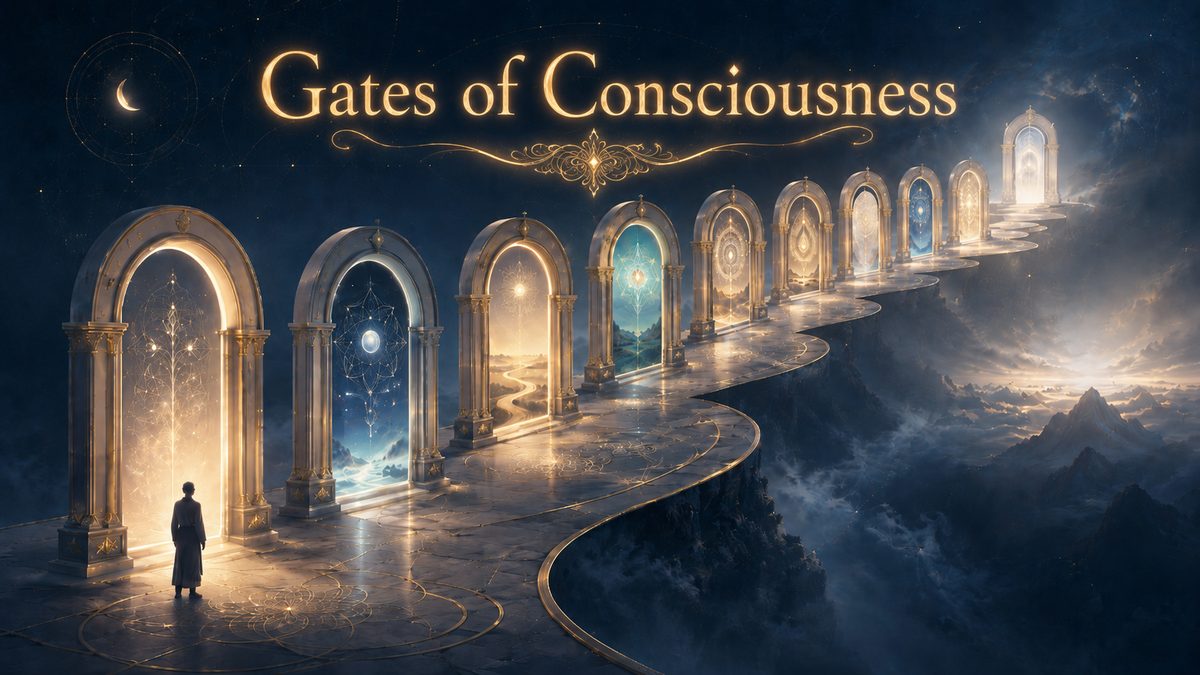
Gate Seven. I Accept
Author: Soheila Dadkhah
Abstract
The gate of “I Accept” is the seventh stage in the architecture of the gates of awareness within the Seromi System. This gate appears after the stage of understanding; the stage in which the human being, after seeing inner patterns and understanding their roots, becomes ready to establish a more realistic, calm, and responsible relationship with inner and outer experience.
Acceptance in this framework is a psychological and existential capacity: the capacity to remain in contact with reality without continuous inner resistance. At this stage, the person learns to recognize experience as it appears in awareness, give it psychological space, and move from automatic reaction toward conscious choice.
The seventh gate plays an important role in reducing inner conflict. A large part of human psychological energy is often consumed by denying emotions, resisting the past, avoiding reality, or hiding rejected parts of the self. Conscious acceptance releases this energy and places it in the service of growth, decision-making, boundaries, and movement toward values. This article examines the cognitive, emotional, bodily, linguistic, and behavioral dimensions of the gate of “I Accept” and shows how acceptance can become the starting point of sustainable transformation.
Keywords
Gate of I Accept, gates of awareness, Seromi System, conscious acceptance, self-acceptance, psychological flexibility, self-compassion, emotional regulation, bodily awareness, responsibility, acceptance of experience, human transformation, boundaries, meaning, inner growth
Introduction
After the human being reaches a deeper understanding of patterns, wounds, behaviors, and the roots of experience in the sixth gate, a new stage begins:
Can I accept what I have seen and understood within my awareness?
Acceptance in the Seromi System is an active stage in the transformation of awareness. At this stage, the person increases the capacity to face reality. The person gradually learns to stop spending all psychological energy on fighting feelings, the past, limitations, or unseen parts of the self. Reality becomes the starting point of transformation.
Acceptance and Commitment Therapy considers acceptance one of the central processes of psychological flexibility: the ability to contact inner experience, remain present in the moment, and move in the direction of values, even when difficult emotions are present. This view is aligned with the seventh gate, because acceptance here becomes a foundation for conscious action.
The gate of “I Accept” brings the human being to a position where they can say:
I see the reality of this moment.
I recognize my inner experience.
I do not lose my power through denial, resistance, or escape.
From this point, I create a more conscious choice.
Guiding Questions of the Article
This article is shaped around several central questions:
What does acceptance mean on the path of awareness?
How is acceptance connected with self-awareness, responsibility, and change?
How can a person accept difficult emotions and still move toward growth?
How does acceptance differ from passive endurance, behavioral justification, or inaction?
What roles do the body, language, emotion, and meaning play in the process of acceptance?
How can self-acceptance reduce shame and self-blame?
How does acceptance prepare the ground for self-love and inner peace?
The Place of the Seventh Gate in the Path of Awareness
The seventh gate stands on the foundation of the six previous stages. First, the human being experiences presence. Then they come into contact with emotions, activate the power of creation, build stability, see patterns, and understand their meaning. Acceptance becomes possible after this sequence.
At this stage, the person can hold different aspects of experience within a wider field of awareness. They no longer lose their whole identity through every emotion, memory, weakness, or limitation. Acceptance means the ability to hold reality in awareness with responsibility and kindness.
Self-acceptance has also been associated with psychological health in psychological literature. Studies on unconditional self-acceptance have shown that accepting the self, especially in the face of failure or negative feedback, can support healthier psychological functioning.
The Cognitive Dimension of Acceptance
In the cognitive dimension, acceptance begins with realism. The person examines the situation as it is currently perceived and becomes more able to distinguish observable reality from fear, interpretation, and prediction.
The cognitive questions of this gate include:
What is the observable reality right now?
Which part of this experience have I avoided seeing?
What is within my control?
Which part of this situation requires adaptation, correction, or boundaries?
Which choice is more aligned with my values?
At this stage, the mind moves from fighting reality toward organizing experience. Cognitive acceptance helps the person distinguish between fact, interpretation, fear, and imagined future outcomes.
The Emotional Dimension of Acceptance
Emotional acceptance means recognizing emotion as part of human experience. Fear, grief, anger, jealousy, shame, sadness, and anxiety are observed as psychological signals. The person learns that a difficult emotion is not necessarily a command for immediate reaction.
Fear may reveal a need for safety. Anger may point to violated boundaries. Grief may reveal a need for mourning or care. Shame may show a part of identity that still needs acceptance and compassion.
Research on self-compassion shows that a kinder relationship with the self can become a healthier alternative to harsh self-judgment and can be connected with psychological well-being. In the seventh gate, emotional acceptance allows the person to meet difficult feelings without turning them into permanent identity.
The Bodily Dimension of Acceptance
The body plays an important role in the seventh gate. Acceptance becomes deeper when it moves beyond thought and becomes a lived bodily experience. During acceptance, the body may show signs such as deeper breathing, reduced contraction, released shoulders, warmer hands, a softer throat, or inner quiet.
The body helps the person recognize whether acceptance has remained a mental statement or has become an embodied experience. Sometimes the mind says, “I accept,” while the body remains in defense, contraction, or alertness. In this state, acceptance needs time, breath, safety, and repetition.
Language as a Tool of Acceptance
Language shapes the path of acceptance. The sentences a person uses about themselves and their experience can either open the field of acceptance or limit it.
The language of acceptance may sound like this:
This feeling is active in me right now.
This part of me needs attention.
I see this experience and can respond to it with awareness.
I recognize the past and create a new choice today.
I am not perfect, yet I am on the path of growth.
This kind of language prevents experience from becoming a fixed identity. Instead of saying, “I am the problem,” the person says, “An experience is active in me.” This linguistic shift creates a healthy distance between the human being and the experience.
Acceptance and Responsibility
Conscious acceptance is connected with responsibility. When a person accepts an experience, they become more capable of responding to it. They can see which part of the situation needs care, decision, correction, boundaries, or action.
In the Seromi System, acceptance and responsibility grow together. Acceptance without responsibility leads to stagnation. Responsibility without acceptance often becomes pressure and self-blame. The balance of this gate is:
I accept reality.
I see my part.
From this point, I make a more conscious choice.
Self-Acceptance
Self-acceptance is one of the central axes of the seventh gate. At this stage, the person learns to create a more conscious relationship with parts of the self that were previously rejected.
These parts may include weaknesses, mistakes, needs, fears, limitations, sensitivities, or past experiences. Self-acceptance becomes the place where growth leaves the field of inner war and enters a more conscious path.
In humanistic psychology, acceptance and unconditional positive regard play an important role in personal growth and in creating a safe therapeutic relationship. Contemporary discussions of the organismic valuing process also examine this idea in relation to growth, inner congruence, and human experience.
Acceptance in Relationship
Acceptance in relationship means seeing the reality of a relationship more clearly and responding to it with greater maturity. Relational acceptance includes recognizing needs, boundaries, differences, patterns, and the real capacity of the relationship.
At this stage, the person learns not to see the other only through fear and old wounds. Gradually, they begin to distinguish between the reality of the other person and their own wounded interpretations. This distinction increases the possibility of healthy dialogue, clear boundaries, and more conscious relational choices.
Relational acceptance becomes healthy when it is accompanied by boundaries. Boundaries allow acceptance to become relational maturity. The person can understand the other more clearly, see the capacity of the relationship, and at the same time protect dignity, safety, and values.
Signs That the Seventh Gate Is Becoming Active
The activation of the gate of “I Accept” can be observed through several signs:
The person does not immediately turn difficult emotions into identity.
After seeing a truth, they experience less harsh self-blame.
The body develops a calmer capacity when facing reality.
Their language shifts from conflict and condemnation toward observation and responsibility.
They can accept their part while still caring for themselves.
They see the reality of relationships, limitations, and capacities more clearly.
They use acceptance as the starting point of action.
They can say: “I accept this reality now, and from here I move.”
Conclusion
The gate of “I Accept” is an important stage in the maturation of awareness. At this stage, after seeing and understanding, the human being develops a greater capacity to contact reality. Acceptance frees psychological energy from endless inner conflict and directs it toward choice, growth, boundaries, and conscious movement.
This gate invites the person into a more mature relationship with the self, the past, emotions, the body, and relationships. Acceptance helps the person begin from reality rather than from an idealized image. From this point, transformation becomes more sustainable.
I Accept means:
I see the reality of this moment.
I hold my inner experience in awareness.
I build a more human relationship with myself.
I accept my part and choose more responsibly.
I move from fighting what is toward creating what is possible.
The message of this gate is:
Acceptance is not the end of movement; it is the beginning of more conscious movement.
Common Questions About the Seventh Gate of Awareness
Question One: What is the seventh gate of awareness about?
The seventh gate is about conscious acceptance. At this stage, the person learns to see inner and outer experiences with realism, responsibility, and kindness. Acceptance helps the person move away from inner conflict and use psychological energy for choice, growth, and conscious action.
Question Two: How is acceptance connected with change?
Acceptance is the starting point of sustainable change. When a person sees reality more clearly, they can better recognize which part requires action, boundaries, correction, or care. In Acceptance and Commitment Therapy, acceptance is placed beside committed action; the person accepts inner experience and moves in the direction of values.
Question Three: How does acceptance differ from passive endurance?
Conscious acceptance is connected with presence, recognition, and choice. Passive endurance is usually connected with silence, inaction, and neglecting needs. The seventh gate helps the person see reality, recognize emotion, identify boundaries, and choose a more appropriate response.
Question Four: Why is self-acceptance important?
Self-acceptance helps the person avoid making their worth entirely dependent on success, performance, external approval, or perfection. Psychological research on unconditional self-acceptance has connected this concept with mental health and healthier responses to failure or negative feedback.
Question Five: How is acceptance connected with self-compassion?
Self-compassion helps the person relate to mistakes, pain, and limitations in a more human way. Acceptance opens the field of contact with reality, and compassion makes the quality of that contact kinder and more responsible. In this gate, acceptance and compassion work together to reduce shame and support transformation.
Question Six: Does accepting difficult emotions make them stronger?
Accepting difficult emotions can reduce the intensity of inner conflict. When the person sees the emotion and contacts it consciously, emotional regulation and wiser response become more possible. In this view, difficult emotion becomes information for awareness.
Question Seven: What role does the body play in acceptance?
The body shows how deeply acceptance has been embodied. Breath, muscle contraction, the chest, throat, stomach, and shoulders may reveal whether the person is still in defense or is gradually moving toward acceptance. Breathing practices, pauses, and bodily awareness can deepen the process of acceptance.
Question Eight: How does acceptance work in relationships?
Acceptance in relationships means seeing the reality of the relationship, its capacities, limitations, differences, and needs. This kind of acceptance helps the person stop seeing the relationship only through fear and projection. Relational acceptance becomes healthier when it is accompanied by boundaries, dialogue, and responsibility.
Question Nine: What is a simple daily practice for the seventh gate?
At the end of the day, choose one difficult experience and write three sentences:
I now accept that this experience has become active in me.
The feeling that comes with it needs to be seen.
A more conscious response from me could be…
This practice helps acceptance move from thought into observation, feeling, and choice.
Question Ten: What begins after acceptance?
After acceptance, the person becomes more ready for self-love. When inner experiences are seen, understood, and accepted, the person’s relationship with the self becomes softer, more human, and more integrated. Therefore, the seventh gate prepares the ground for the next gate: “I Love Myself.”
English References
Hayes, S. C., Strosahl, K. D., and Wilson, K. G. (2012). Acceptance and Commitment Therapy: The Process and Practice of Mindful Change. Guilford Press.
Hayes, S. C., Levin, M. E., Plumb-Vilardaga, J., Villatte, J. L., and Pistorello, J. (2013). Acceptance and Commitment Therapy and Contextual Behavioral Science: Examining the Progress of a Distinctive Model of Behavioral and Cognitive Therapy. Behavior Therapy, 44, 180–198.
Neff, K. D. (2003). Self-Compassion: An Alternative Conceptualization of a Healthy Attitude Toward Oneself. Self and Identity, 2, 85–101.
Chamberlain, J. M., and Haaga, D. A. F. (2001). Unconditional Self-Acceptance and Psychological Health. Journal of Rational-Emotive and Cognitive-Behavior Therapy, 19, 163–176.
Rogers, C. R. (1961). On Becoming a Person: A Therapist’s View of Psychotherapy. Houghton Mifflin.
Maurer, M. M., Corthouts, F., van den Broeck, A., and colleagues. (2020). Revisiting the Organismic Valuing Process Theory of Personal Growth. Frontiers in Psychology.
Bernard, M. E. (2013). The Strength of Self-Acceptance: Theory, Practice and Research. Springer.
Gross, J. J. (1998). The Emerging Field of Emotion Regulation: An Integrative Review. Review of General Psychology, 2, 271–299.
Kabat-Zinn, J. (1990). Full Catastrophe Living: Using the Wisdom of Your Body and Mind to Face Stress, Pain, and Illness. Delacorte.
Ryff, C. D., and Singer, B. H. (2008). Know Thyself and Become What You Are: A Eudaimonic Approach to Psychological Well-Being. Journal of Happiness Studies, 9, 13–39.
A Psychological and Social Analysis of the Nine Gates of
Gate Nine. I Live My Presence Author: Soheila Dadkhah Abstract
Gate Eight. I Love Myself Author: Soheila Dadkhah Abstract The