

The Gates of Consciousness
The Gates of Consciousness.An Analysis of the Nine Gates of Awareness
A Psychological and Social Analysis of the Nine Gates of
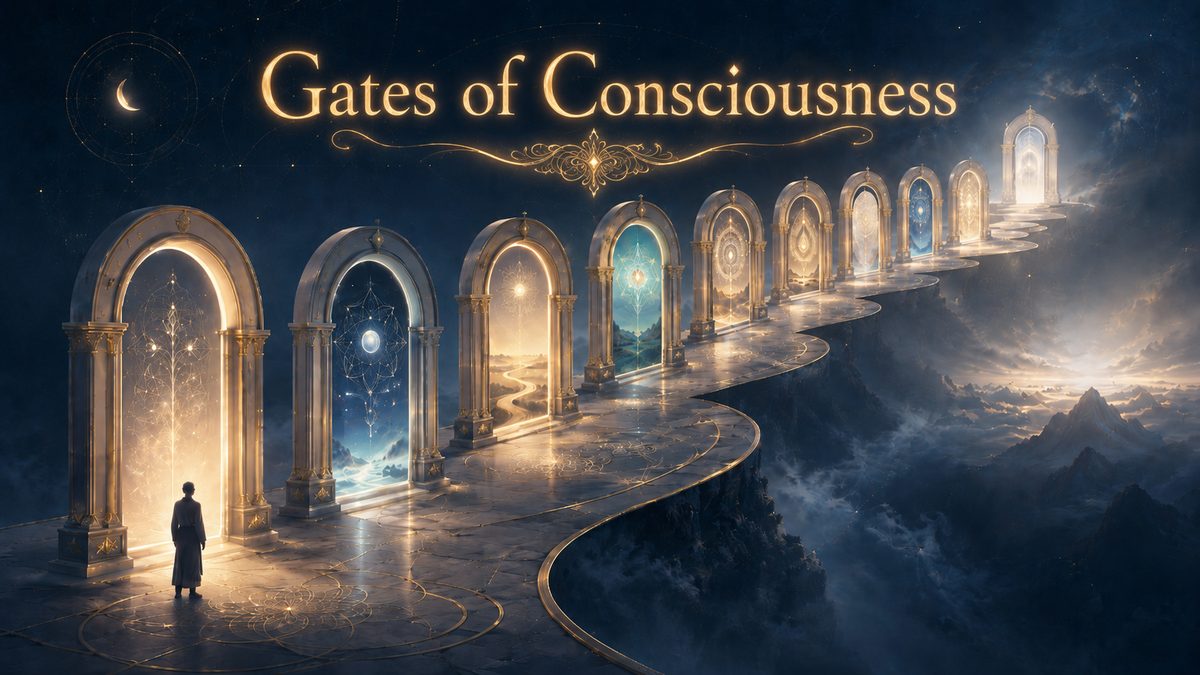
Gate Six. I Understand
Author: Soheila Dadkhah
Abstract
The gate of “I Understand” is the sixth stage in the architecture of the gates of awareness within the Seromi System. This gate comes after the stage of seeing; a stage in which the human being no longer only observes patterns, reactions, and repetitions, but gradually begins to understand the deeper meaning hidden behind them.
Within this framework, understanding does not mean intellectual knowledge or logical explanation alone. Many people can explain their pain, behavior, relationships, or past experiences, yet still remain internally at war with them. The sixth gate refers to a bodily, emotional, and existential form of understanding; a kind of understanding in which the person not only knows what happened, but can also hold it within themselves without collapsing, denying it, or condemning themselves.
At this stage, awareness moves from observation toward integration. The person begins to understand that many past behaviors, even when harmful, unconscious, or incomplete, may once have been attempts to survive, feel safe, receive love, protect the self, or create meaning. This understanding does not justify mistakes; rather, it reveals the inner logic of experience. This article examines the cognitive, emotional, bodily, linguistic, and existential dimensions of the gate of “I Understand” and shows how conscious understanding can guide the human being from inner conflict toward deeper reconciliation with the self.
Keywords
Gate of I Understand, gates of awareness, Seromi System, conscious understanding, integration, meaning, self-awareness, self-compassion, emotional regulation, reframing, acceptance, psychology of transformation, bodily understanding, emotional understanding, reconciliation with the past, human growth
Introduction
After the human being learns to see in the fifth gate, a new question appears on the path of awareness:
Now that I see, can I understand?
Seeing removes the veil. The person begins to notice that certain patterns have repeated throughout life. They see that some reactions, relationships, choices, and fears were not random. They see that in certain situations, the wounded child, the defensive part, old shame, or fear of rejection became active within them.
But seeing is not the end of the path. A person may see something and still fight against it. They may say:
I see why I did that, but I still hate myself.
I see where this pattern came from, but I cannot accept it.
I see that I was wounded, but why did I understand it so late?
I see what happened, but my body is still not calm.
The sixth gate moves the human being from observing the pattern to understanding the meaning of the pattern. Here, understanding does not mean collecting information. Understanding means that what has been seen can find a place in the person’s psyche, body, and emotional field. What was previously fragmented, painful, or threatening gradually begins to enter the structure of awareness.
In the Seromi System, “I Understand” does not mean that the person has found all the answers. It means that they no longer need to deny part of the truth in order to survive. They can say:
Now I understand why that part of me behaved in that way.
Now I understand that this reaction, although incomplete, was once formed to protect me.
Now I understand that understanding is not the end of pain; it is the beginning of a new relationship with pain.
Guiding Questions of the Article
This article is shaped around several central questions:
What does understanding mean on the path of awareness?
What is the difference between understanding, knowing, analyzing, and justifying?
Why may a person know something but still not truly understand it?
How does seeing a pattern become deeper understanding?
What roles do emotion, body, language, and meaning play in the process of understanding?
How can understanding reduce inner conflict?
What is the difference between understanding and forgiveness?
Why can understanding without compassion turn into self-blame?
How does the gate of “I Understand” prepare the ground for the next gate, which is deeper acceptance and reconciliation with the self?
What “I Understand” Does Not Mean
To understand this gate accurately, it is necessary to clarify what “I Understand” does not mean.
This gate does not mean justifying harmful behavior. When a person understands why a behavior occurred in themselves or in another person, it does not necessarily mean that the behavior was right. Understanding means recognizing the roots, not erasing the consequences.
This gate does not mean surrendering to the past. Understanding does not say that because something had a root, it must continue forever. On the contrary, when the root is seen and understood, real change becomes more possible.
Understanding also does not mean endless intellectual analysis. Sometimes a person has many explanations about their past, wounds, and relationships, but their body is still tense, their emotions are still at war, and their behavior still repeats the same pattern. This is closer to knowing than to understanding.
“I Understand” also does not mean immediate forgiveness. A person may understand something and still not be ready to forgive. Understanding can prepare the ground for forgiveness, but it must not become a moral pressure.
The meaning of this gate is:
I can see the inner meaning of an experience and hold it in my awareness without denying it, justifying it, or condemning it.
The Difference Between Knowing, Analyzing, and Understanding
The sixth gate distinguishes between three levels: knowing, analyzing, and understanding.
Knowing
Knowing means having information. A person may know that their childhood was difficult, know that they fear rejection, know that they become anxious in relationships, or know that they become silent under pressure. But this knowing does not always lead to transformation.
Analyzing
Analyzing means that the mind tries to explain causes, relationships, and structures. Analysis can be useful, but when it becomes disconnected from the body and emotion, it may keep the person at a safe distance from the truth. In this state, the person speaks about pain, but does not truly touch the pain.
Understanding
Understanding means that information, emotion, body, and meaning come closer together. The person does not only say, “I know why I became this way.” They begin to sense internally how their experience was formed. In understanding, a kind of softening happens. The body may become slightly calmer. Judgment may decrease. The person can begin to relate in a more human way to a part of themselves that they previously rejected.
Understanding means that awareness descends from the head into the body.
Understanding as Integration
In the Seromi System, understanding is a form of integration. This means that parts of experience that were previously separated, denied, shameful, or threatening enter the field of awareness.
A person may have rejected certain parts of themselves:
The fearful part.
The angry part.
The needy part.
The dependent part.
The failed part.
The childish part.
The silent part.
The jealous part.
The controlling part.
In the fifth gate, the person sees these parts. In the sixth gate, they begin to understand why these parts came into existence, what function they had, what they were protecting, and what they did not know.
This understanding moves the person away from direct conflict with themselves. They begin to see that even the difficult parts within them often were not trying to destroy them. They were immature, wounded, or defensive attempts at survival.
Understanding Without Justification
One of the most delicate points of this gate is the difference between understanding and justification.
When a person says:
I understand why I behaved that way.
This should not mean that the consequences of that behavior do not matter. Understanding does not remove responsibility; it makes responsibility more human and more precise.
For example:
A person understands that they clung to another person out of fear of abandonment.
This understanding does not make clinginess healthy; but it helps them see the root of the fear instead of collapsing into self-blame.
Someone understands that their anger came from years of being unseen.
This understanding does not justify harming others through anger; but it opens a path for anger to become boundary, expression, and care.
A person understands that their silence was formed from fear of conflict.
This understanding does not erase the consequences of silence; but it creates the possibility of a new voice.
The sixth gate says:
I see the reason, but I do not hide inside the reason.
I understand the root, but I also accept responsibility for the fruit.
The Cognitive Dimension of the Gate of “I Understand”
In the cognitive dimension, the human being begins to connect experiences. They realize that today’s behavior is not always only about today. Many reactions are continuations of unfinished stories from the past.
They ask:
What is the root of this reaction?
Which past experience has become active in this moment?
What does this part of me experience as a threat?
What was this behavior once useful for?
Which belief stands behind this pattern?
Is this pattern still protecting me, or is it now limiting me?
What need is hidden behind this behavior?
At this stage, the mind begins to create meaning instead of judgment. But this meaning must not become a closed and rigid story. Conscious understanding is open and alive. It can deepen with new information.
Cognition in this gate helps the person move beyond the sentence “This is just who I am” and arrive at a more precise sentence:
I learned this reaction, and now I can understand it more clearly.
The Emotional Dimension of the Gate of “I Understand”
Understanding is always accompanied by a change in the person’s emotional relationship with themselves. When a person only knows something, they may still remain angry, ashamed, or hateful toward themselves. But when they understand, a kind of emotional softening appears.
This softening does not mean ignoring pain. It means that the person no longer approaches themselves only with the whip of judgment.
For example:
Instead of saying, “Why was I so weak?” they say:
At that time, I did not have another tool.
Instead of saying, “Why did I become so dependent?” they say:
A part of me was deeply afraid of being left alone.
Instead of saying, “Why did I remain silent?” they say:
My body did not feel safe enough to speak at that time.
This kind of understanding transforms emotion from an enemy into a messenger. The person is no longer only caught in the result of their behavior; they begin to see the need hidden behind the behavior.
The Bodily Dimension of Understanding
Real understanding can often be recognized in the body. When a person truly understands something, the body responds. This response may be very subtle:
The breath becomes deeper.
The shoulders release slightly.
Tears come quietly.
The jaw softens.
The hand moves toward the heart.
The body feels warmth or softness.
A calm silence appears.
Or a simple sentence arises from within: Now I understand.
In bodily understanding, the person does not merely explain; the nervous system also becomes slightly calmer. This is why the sixth gate cannot be crossed only by thinking. The body needs time to digest the truth.
Sometimes the mind says too quickly, “I understand,” while the body is still contracted. In that case, understanding is not yet complete. The sixth gate needs time, breath, pause, and presence.
Language as a Tool of Understanding
Language can deepen understanding or turn it into judgment. In this gate, the human being learns to move their language from blame toward understanding.
The language of blame says:
I am broken.
I always make mistakes.
I should not have felt that way.
I was too weak.
This part of me is unacceptable.
The language of understanding says:
A part of me was afraid at that time.
I reacted with the limited tools I had in the past.
This behavior had a root, and today I can work with it more responsibly.
My feeling carried a message that was heard late.
This part of me needs recognition and care.
The language of understanding separates the person from a fixed identity. It allows them to see behavior without reducing their entire being to that behavior.
Understanding and Compassion
The sixth gate remains incomplete without compassion. Real understanding is usually accompanied by a form of compassion; not performative compassion, not superficial positive thinking, but a more human way of seeing oneself.
Compassion means that the person can see their pain, unconsciousness, or mistake and still remain in a human relationship with themselves.
Compassion does not say:
Everything I did was right.
Compassion says:
I can see the truth without completely destroying myself.
Compassion means that instead of punishing themselves for past unconsciousness, the person asks:
What did this part of me not know?
What was it afraid of?
What did it need and not receive?
How can I respond today with more awareness?
This kind of compassion makes the human being more responsible, not less responsible. When the person is not paralyzed by shame, they can change more effectively.
Understanding the Other
The sixth gate is not only about understanding the self; it is also about understanding the other. But understanding the other does not mean tolerating harm or abandoning boundaries.
Sometimes a person can understand why someone behaved in a certain way and still have a boundary.
They can understand that another person acted from their wound, without allowing that wound to continue harming them.
They can understand that the other person also has history, fear, and limitations, without taking responsibility for that person’s behavior.
Understanding the other is conscious only when it is accompanied by boundaries. Without boundaries, understanding may become justification of harm. With boundaries, understanding becomes relational maturity.
The sentence of this stage is:
I can understand the root of your behavior without allowing that behavior to continue harming me.
Understanding and the Past
An important part of the sixth gate is the human being’s relationship with the past. Many people either fight the past, romanticize it, or deny it. Understanding opens a fourth path.
Understanding the past means:
Seeing what actually happened.
Recognizing its effect on the body and psyche.
Understanding how certain reactions were formed from that time.
Accepting that the past does not change, but the person’s relationship with the past can change.
At this stage, the person does not erase the past. They do not glorify it either. They gradually understand how part of their psyche remained there, and how they can accompany that part today with greater awareness.
When Understanding Comes Late
One of the pains of this gate is the feeling of understanding too late. After many years, a person may say:
Why did I not understand earlier?
Why did I repeat this so many times?
Why did I abandon myself for years?
Why did I allow this pattern to continue?
These questions are natural, but if they turn into self-blame, they move the person away from themselves. The sixth gate reminds us:
Understanding comes when the person’s system is ready to hold it.
Some truths, if seen earlier, may not have been tolerable. The psyche sometimes hides truth until there is enough capacity to hold it. This is not weakness; sometimes it is a survival mechanism.
So instead of saying, “Why did I understand so late?” the person can say:
Now I am ready to understand something I did not previously have the capacity to hold.
Signs That the Sixth Gate Is Becoming Active
The activation of this gate can be observed through several changes:
The person does not only see the pattern; they also understand its meaning.
The intensity of self-blame decreases.
The body becomes slightly calmer when truth is spoken.
The person can understand their past behavior without repeating it.
They understand that many reactions once had a protective function.
Their language shifts from condemnation toward recognition.
They can hold responsibility and compassion at the same time.
They see the need behind the behavior.
They neither deny the past nor turn it into their entire identity.
They can say: “Now I understand, and from this understanding, a new choice becomes possible.”
Possible Distortions in This Gate
The sixth gate, like every stage of awareness, can be distorted.
Justification Instead of Understanding
The person removes responsibility for their own behavior or someone else’s behavior in the name of understanding.
Analysis Instead of Integration
The person explains everything, but their body and emotions remain trapped in the same reaction.
Forced Forgiveness
The person believes that because they understand something, they must immediately forgive, while the body and psyche are not yet ready.
Compassion Without Responsibility
The person becomes kind to themselves but avoids changing behavior and accepting consequences.
Responsibility Without Compassion
The person sees their part, but turns it into inner punishment.
The balance of the sixth gate is this:
I understand, but I do not justify.
I see the meaning, but I do not remove responsibility.
I become kinder to myself, but I do not escape change.
I understand the past, but I do not live in the past.
The Relationship of the Sixth Gate with the Other Gates
The sixth gate stands on the foundation of the five previous gates.
Without “I Am,” understanding may become a threat to identity.
Without “I Feel,” understanding may remain mental and dry.
Without “I Create,” understanding may become an insight without effect.
Without “I Have Stability and Endurance,” understanding may lead to collapse or escape.
Without “I See,” understanding is not possible, because a person cannot deeply understand what they have not seen.
This gate prepares the ground for the next stage, because when the person understands, they become more ready to accept. Acceptance without understanding may become forced, superficial, or performative. But when understanding settles in the body and emotion, acceptance gradually becomes more natural.
Conclusion
The gate of “I Understand” moves the human being from observing the pattern to understanding its meaning. At this stage, awareness does not only see; it begins to integrate.
Understanding means that the person can see their experience within a larger context. They understand why certain reactions were formed, what need stood behind them, what fear fed them, and how they can respond today with greater awareness.
This gate does not say that mistakes are unimportant. It does not say that everything should be justified. It does not say that the human being must immediately forgive or beautify the past. Rather, it says:
I can understand the truth without using it to destroy myself or deny responsibility.
I Understand means:
I see the roots of my patterns.
I understand the emotional logic of past behaviors.
I move toward understanding through my body, emotions, and mind.
I connect responsibility with compassion.
I understand the past, but I build the future with new awareness.
Ultimately, the message of this gate is:
When I understand, I no longer only fight with the past.
I give the meaning of what I have seen a place in my awareness.
From this understanding, the path toward deeper reconciliation with myself begins.
Common Questions About the Sixth Gate of Awareness
Question One: What is the sixth gate of awareness about?
The sixth gate of awareness is about understanding the roots, meanings, and inner patterns behind human experience. At this stage, the person does not only see that a pattern has repeated in life; they begin to understand why that pattern was formed, what need stood behind it, and how they can respond to it with greater awareness. This gate is connected with meaning-making, emotional regulation, self-compassion, and cognitive reframing.
Question Two: What is the difference between knowing and understanding?
Knowing means having information about something. Understanding means that this information becomes meaningful in the body, emotions, cognition, and behavior. A person may know that they are afraid of rejection, but still repeat anxious reactions in relationships. Understanding becomes deeper when the person recognizes the connection between past experience, present emotion, and current behavior.
Question Three: Does understanding mean justifying behavior?
Understanding does not mean justifying behavior. A person can understand why a behavior occurred in themselves or in another person, while still accepting responsibility for its consequences. In this gate, the purpose is not to erase mistakes. The purpose is to see their roots so that a new choice becomes possible.
Question Four: Why can a person see something but still not understand it?
Seeing means recognizing a pattern or a reality. Understanding means that the meaning of that pattern becomes integrated at the level of mind, emotion, and body. A person may see that they always become silent during conflict, but still not understand that this silence comes from an old fear, an experience of unsafety, or a need for protection. Understanding usually requires time, pause, emotional contact, reflection, and inner safety.
Question Five: How is this gate connected with self-compassion?
When a person understands the root of a behavior, it becomes possible to relate to themselves with more kindness and responsibility. Self-compassion does not mean escaping responsibility. It helps the person see the truth without collapsing into shame or self-blame. In this gate, compassion allows understanding to become a path of transformation rather than a new form of inner punishment.
Question Six: Does understanding always lead to forgiveness?
Understanding may prepare the ground for forgiveness, but it does not always lead to immediate forgiveness. Sometimes a person first needs to recognize pain, anger, boundaries, and the impact of what happened. In the Seromi System, understanding must not become moral pressure to forgive. A person can understand the root of a behavior and still need time, boundaries, and care.
Question Seven: What is the role of the body in the sixth gate?
Understanding is not only a mental process. The body also participates in understanding. When a person truly understands something, the breath may deepen, tension may decrease, tears may come, or the body may feel a relative sense of relief. The body often shows whether understanding has remained intellectual or has become integrated.
Question Eight: How can writing support understanding?
Writing can make a vague experience more visible and easier to examine. When a person writes about an emotional experience, they can create more distance between the event, the emotion, the meaning, and their response. Writing helps turn seeing into understanding, especially when it is used not for endless analysis, but for honest contact with experience.
Question Nine: How is the sixth gate connected with Acceptance and Commitment Therapy?
Acceptance and Commitment Therapy helps people contact their inner experience, create distance from thoughts, clarify values, and move in the direction of those values. The sixth gate is aligned with this process because it helps the person stop fighting their experience, understand its meaning, and respond with more awareness. The aim is not passive acceptance, but greater psychological flexibility.
Question Ten: What is a simple daily practice for the sixth gate?
At the end of the day, pause for a few minutes and choose one important experience from the day. Then write three questions:
First: What did I see about myself today?
Second: What need, fear, or past experience may have been behind this reaction or feeling?
Third: Now that I understand it more clearly, what is my more conscious response?
This practice helps seeing become understanding. The goal is not endless analysis. The goal is to build a clearer and kinder relationship with inner experience.
English References
Park, C. L. (2010). Making Sense of the Meaning Literature: An Integrative Review of Meaning Making and Its Effects on Adjustment to Stressful Life Events. Psychological Bulletin, 136, 257–301.
Park, C. L., and Folkman, S. (1997). Meaning in the Context of Stress and Coping. Review of General Psychology, 1, 115–144.
Gross, J. J. (1998). The Emerging Field of Emotion Regulation: An Integrative Review. Review of General Psychology, 2, 271–299.
Gross, J. J., and John, O. P. (2003). Individual Differences in Two Emotion Regulation Processes: Implications for Affect, Relationships, and Well-Being. Journal of Personality and Social Psychology, 85, 348–362.
Ray, R. D., McRae, K., Ochsner, K. N., and Gross, J. J. (2010). Cognitive Reappraisal of Negative Affect: Converging Evidence from EMG and Self-Report. Emotion, 10, 587–592.
Neff, K. D. (2003). The Development and Validation of a Scale to Measure Self-Compassion. Self and Identity, 2, 223–250.
Pennebaker, J. W. (1997). Writing About Emotional Experiences as a Therapeutic Process. Psychological Science, 8, 162–166.
Pennebaker, J. W., and Smyth, J. M. (2016). Opening Up by Writing It Down: How Expressive Writing Improves Health and Eases Emotional Pain. Guilford Press.
Hayes, S. C., Strosahl, K. D., and Wilson, K. G. (2012). Acceptance and Commitment Therapy: The Process and Practice of Mindful Change. Guilford Press.
Hayes, S. C., Levin, M. E., Plumb-Vilardaga, J., Villatte, J. L., and Pistorello, J. (2013). Acceptance and Commitment Therapy and Contextual Behavioral Science: Examining the Progress of a Distinctive Model of Behavioral and Cognitive Therapy. Behavior Therapy, 44, 180–198.
A Psychological and Social Analysis of the Nine Gates of
Gate Nine. I Live My Presence Author: Soheila Dadkhah Abstract
Gate Eight. I Love Myself Author: Soheila Dadkhah Abstract The