
NLP
Human Needs and Their Viruses.Part3
Part Three: Reconstructing Distorted Needs Using NLP Plus Techniques Author:
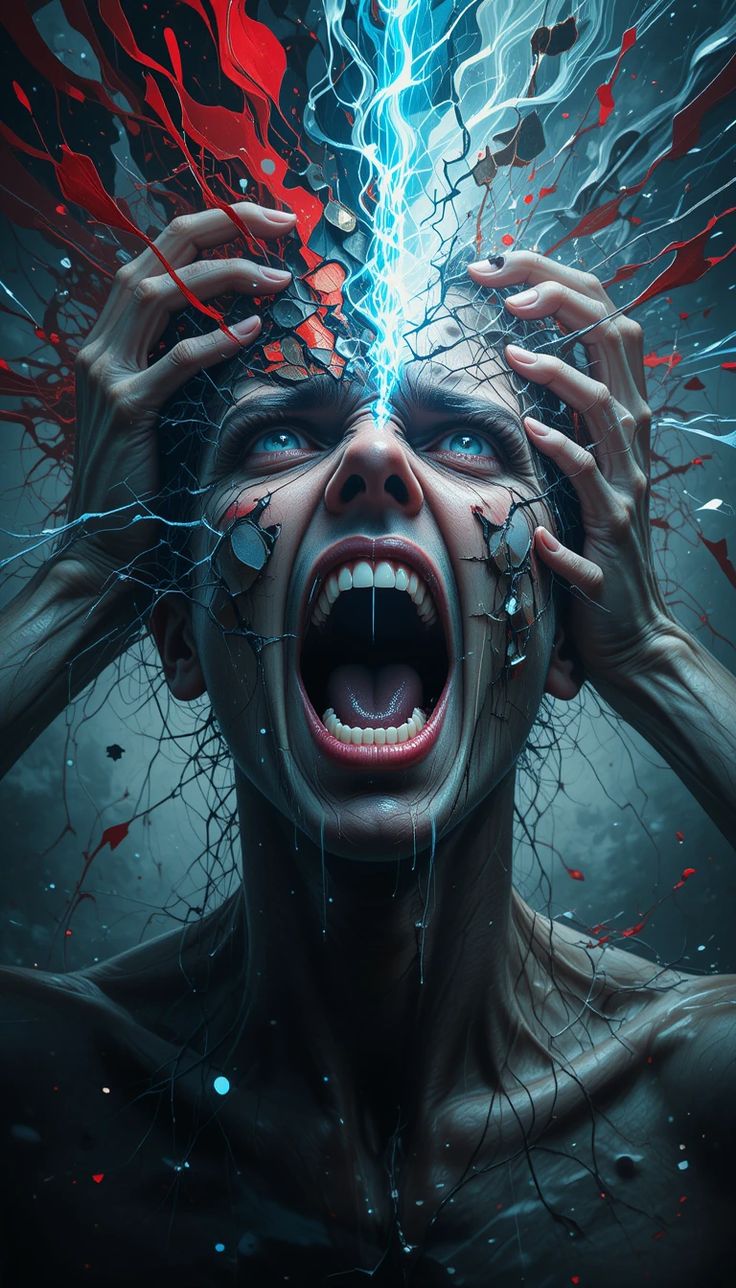
How Does Consumer Society Turn Fear into Need?
Author: Soheila Dadkhah
Abstract
Fear is not always a sign of personal weakness, psychological disorder, or a mental error. Some fears have biological and protective roots, some are constructed within the individual’s mental map, and others are natural responses to unsafe social, economic, cultural, and relational structures. In the modern world, consumer society plays a significant role in producing, reinforcing, and directing human fears. This society often first creates a sense of lack, inadequacy, falling behind, invisibility, or exclusion in the individual, and then sells that same fear back to them in the form of need, desire, product, lifestyle, performative success, or external validation.
The purpose of this article is to examine how consumer society turns fear into need, and how some of the fears of modern human beings do not arise from their true inner self, but from cultural, media-driven, and economic messages. This article distinguishes between three types of fear: natural fear, constructed fear, and real social fear. This distinction is important because not all fears are imaginary; however, not all fears are signs of personal deficiency either. For example, fear of entrepreneurship in an unstable economic environment may be a real and understandable fear, not merely a lack of self-confidence. Similarly, fear of relationships in a culture where relational values have been reduced to consumption, display, comparison, and instability is not necessarily a sign of a person’s inability to love; it may be a natural response to relational insecurity.
This article shows that understanding the mental map and identifying the source of fear can help people move away from self-blame, reactive consumption, and dependence on external validation. The main question is not simply, “Why am I afraid?” The deeper question is: Where did this fear come from, who created it in me, and does it truly belong to my personality?
Introduction: Not All of Our Fears Are Personal
When human beings feel afraid, their first interpretation is often that something is wrong with them. They may say to themselves: “I am weak,” “I do not have enough confidence,” “I am too sensitive,” “I am not brave enough,” “I have not grown enough,” or “There is something wrong with my personality.” This kind of self-blame is very common, especially in an era where many messages in personal development and success culture place the responsibility for everything entirely on the individual. Personal responsibility is important, but if we attribute every fear only to individual weakness, we ignore a large part of social, economic, cultural, and relational reality.
Human beings do not live in a vacuum. Their minds are not shaped only by personal experiences; family, school, media, economy, culture, advertising, social networks, collective values, and power structures also play a role in shaping their mental map. A person may think that their fears are entirely personal, while part of those fears may have been transmitted to them from the outside. For example, fear of aging is not always merely fear of the natural changes of the body; sometimes it is the result of a culture that ties human value to youth, beauty, and visibility. Fear of failure is not always merely an inner weakness; sometimes it is the result of a society that measures human beings by achievement, income, status, and the display of success.
Consumer society enters precisely at this point. This society does not merely sell products; it sells meanings. It does not merely offer goods; it also defines the desirable image of life, body, relationship, success, and identity. It tells human beings what is valuable, what is insufficient, what must be corrected, what must be hidden, and what must be purchased in order for the individual to appear more acceptable. In such an environment, human fears gradually enter the cycle of consumption. The individual is no longer only afraid of real danger; they also become afraid of not being enough, being ordinary, not being seen, falling behind, aging, failing, not being lovable, and being excluded.
The central sentence of this article is:
Sometimes we are not afraid because of personal weakness; we are afraid because we live in a world that constantly sends us messages of insecurity.
Natural Fear, Constructed Fear, and Real Social Fear
To keep this discussion precise, we need to distinguish between three types of fear. The first is natural fear. This fear is part of the survival system and becomes active in the face of real and immediate danger. When a person faces violence, an accident, serious illness, physical threat, or a genuinely dangerous situation, fear helps the body prepare for action. This kind of fear is not the enemy of human beings; it is part of their biological intelligence.
The second type is constructed fear. This fear does not necessarily arise from real danger, but from the meanings that the mind, society, or culture attaches to something. For example, fear of gaining weight, aging, being ordinary, or not having a certain lifestyle does not always come from real danger. Sometimes these fears arise from standards created by consumer society and imposed on the individual. When a person believes that if their body does not match advertising standards they are not lovable, fear of appearance is no longer only about the body; it becomes an issue of value, acceptance, and identity.
The third type is real social fear. This part is very important because if we do not see it, the article falls into psychological oversimplification. Some fears truly have social roots and cannot be reduced merely to limiting beliefs or mental errors. For example, fear of entrepreneurship in a society marked by economic instability, lack of support, market volatility, administrative corruption, or financial pressure is an understandable fear. Such a person is not necessarily cowardly or incapable; they are sensing a real risk. Similarly, someone who fears romantic relationships may not only have a personal wound; they may be living in a space where relational values have been reduced to emotional consumption, comparison, lack of commitment, display, and self-interest.
So the accurate sentence is:
Not all fears are illusions; but not all fears are signs of personal weakness either.
How Society First Creates a Sense of Lack
Consumer society needs people who always feel that something is missing in order to survive. If a person feels, “I am enough,” “My body is not my enemy,” “My simple life is not worthless,” or “I do not have to constantly prove something in order to be lovable,” a large part of consumer society’s power begins to weaken. Therefore, this society, directly or indirectly, separates human beings from the feeling of enoughness and pulls them into the cycle of lack.
This lack is not always obvious. Sometimes it appears in the form of beauty advertising: “If your skin is not like this, you are not young and attractive.” Sometimes it appears in the form of success: “If your income is not high, you are falling behind.” Sometimes it appears in the form of relationships: “If your relationship does not look like the images on social media, something is missing.” Sometimes it appears in the form of lifestyle: “If your travel, home, clothes, body, career, or happiness does not match the desirable images, your life is not enough.” In all these messages, there is a hidden meaning: You are not enough as you are.
When this message is repeated again and again, it enters the person’s mental map. The individual no longer merely sees an advertisement; gradually, they begin to see themselves through the eyes of that advertisement. They see their body as a project to be fixed, not as a home to live in. They see their relationship as a showcase for comparison, not as a space for growth and intimacy. They see success as external performance, not as a meaningful personal path. This is where consumer society moves beyond economics and enters the human psyche.
The key sentence of this section is:
Consumer society separates human beings from the point of “I am enough” and moves them into the point of “I must add something to myself in order to become enough.”
How Fear Turns into Need
The heart of consumer society’s mechanism lies here: turning fear into need. Consumer society usually does not say to people, “Be afraid.” If it said this directly, resistance would arise. Instead, it presents fear in the clothing of need, desire, progress, beauty, success, attractiveness, security, or popularity. The person thinks they want something, while at a deeper level, they may actually be escaping from something.
The formula of this cycle is:
Sense of lack → fear of not being enough → constructed need → consumption → temporary relief → return of lack
For example, a person may think they need a specific beauty product. But if they look deeper, they may realize that the real issue is not the product; it is fear of not being seen, aging, not being attractive, or not being lovable. Or someone may think they need to display success on social media, while at a deeper level they may be afraid of being seen as worthless, falling behind, or being ordinary. Here, consumption is not fed by a real need, but by a constructed fear.
Of course, this does not mean rejecting all purchases, beauty, progress, or success. The issue is not that human beings should not buy things, grow, or live beautifully. The issue is whether the choice comes from freedom or fear. Is the product, relationship, success, or lifestyle aligned with the person’s real values, or is it only an attempt to calm the feeling of not being enough? The difference between these two is very important. The same choice may come from a love of growth; it may also come from fear of being excluded.
The key sentence of this section is:
Many of our needs are fears that consumer society has dressed in the clothing of desire.
How Consumer Society Keeps Human Beings Dependent
Consumer society does not only produce fear; it turns fear into dependence. This dependence is not always dependence on products. Sometimes it is dependence on approval, visibility, social image, comparison, performative relationships, external success, or quick solutions for growth and peace. Modern human beings may think they are choosing freely, but if their choices are guided by fear, their freedom is limited.
This dependence remains stable because the relief produced by consumption is usually temporary. A person buys something, changes their appearance, posts an image, receives approval, purchases a course, displays a relationship, or highlights a success, and for a while they feel calmer. But because the root of fear in their mental map has not been seen or rewritten, the feeling of lack returns. Then the cycle begins again.
In this cycle, consumer society does not act as a real healer; it acts as a temporary sedative. It does not help the person understand why they feel inadequate; it only gives them something so they do not have to hear that feeling for a while. But an unheard feeling does not disappear. It returns, perhaps even more strongly. This is why the more a person consumes, the more they may feel lacking, because consumption has replaced understanding.
The key sentence of this section is:
Consumer society does not heal fear; it calms it temporarily so that it can return again.
Which Fears Are Constructed and Not Based on Certain Reality?
Some fears feel very real, but their foundation is not certain reality; rather, it is a meaning given by society, family, media, or culture. For example, fear of aging is understandable at the biological level, but when aging is interpreted as being excluded, becoming unlovable, or losing value, we are dealing with a constructed fear. The body changes, but society gives this change a threatening meaning.
Fear of being ordinary is another important example. In many historical periods, a person could live a simple, healthy, and meaningful life without feeling that they had to constantly be special, visible, or different. But in a culture of display and comparison, being ordinary becomes a threat. The individual fears that their life is not impressive enough. They fear that if they are not seen, it is as though they do not exist. This fear is fed less by a real psychological need and more by the structure of social comparison and display.
Fear of failure works in the same way. In its natural form, failure can be part of learning. But when society ties a person’s value to results, income, rank, position, and the image of success, failure is no longer just an experience; it becomes an identity judgment. The person does not say, “I did not succeed in this task.” In their mental map, they say, “I am not enough.” Here, fear of failure has been constructed and intensified.
The key sentence of this section is:
These fears feel real, but they are not always built on actual reality; sometimes they are built on meanings that society has sold to us.
Which Fears Are Real but Not a Problem with Our Personality?
The more important and more mature part of this discussion is that some fears are truly real, but they should not be attributed to a defect in the person’s character. For example, a person who fears entrepreneurship may genuinely be facing economic risks, lack of support, financial failure, market instability, family pressure, difficult regulations, or painful social experiences. If we simply tell such a person, “You have a limiting belief” or “Get out of your comfort zone,” we are ignoring part of their external reality.
Fear of entrepreneurship in such conditions can carry a healthy message: “I need more information, a more accurate plan, support, skills, capital, a network, and risk management.” Therefore, the issue is not that the person should not feel afraid; the issue is that they should interpret their fear correctly. If they turn fear into identity, they say, “I am a coward.” But if they turn fear into a message, they say, “I need preparation and resources in the face of real risk.” This difference is fundamental.
The same is true in relationships. When relational values become vulgarized, when people consume each other emotionally instead of building intimacy, when commitment is replaced by short-term excitement, when people enter relationships with superficial, comparative, or self-interested standards, fear of relationships becomes completely understandable. Such fear is not necessarily a sign of inability to love; it may be a sign of healthy sensitivity to instability in relational values. Of course, if this fear is not processed, it may isolate the person; but the existence of the fear itself should not automatically be seen as pathological.
The key sentence of this section is:
Sometimes my fear is not sick; the environment I live in is unsafe.
Do Not Confuse Real Fear with Your Identity
One of the major mistakes human beings make is turning fear into identity. Instead of saying, “I am experiencing fear in this situation,” they say, “I am a fearful person.” Instead of saying, “This situation feels unsafe to me,” they say, “I am weak.” Instead of saying, “I need more preparation before entering this path,” they say, “I am not the kind of person who can do this.” Turning experience into identity is one of the most dangerous distortions in the mental map.
When fear becomes identity, the person no longer tries to understand the message of fear. They blame themselves, compare themselves, hide, or try to deny fear through pressure and performance. But when fear is seen as a message, the possibility of conscious response emerges. The person can ask: “What is this fear trying to protect? Is the danger real? Is the fear constructed? Do I need skill, support, boundaries, time, information, or a revision of my beliefs?”
For example, someone who fears entrepreneurship does not need to immediately label themselves as cowardly. A more accurate sentence would be: “I feel unsafe in the face of real risk, and I need to increase my resources, information, and support.” Someone who fears relationships does not need to immediately see themselves as problematic either. A more accurate sentence would be: “A part of me feels unsafe in relationships because my experiences and cultural environment have made trust difficult.”
The key sentence of this section is:
Real fear becomes dangerous when we turn it into our identity.
How Can We Know Whether Our Fear Is Constructed or Real?
To distinguish constructed fear from real fear, we need to ask precise questions instead of judging quickly. First, we should ask: Is this fear related to a specific, real, and observable danger, or is it more connected to mental imagery, other people’s judgment, comparison, or social meaning? If the danger is specific, it must be taken seriously, and resources, plans, and support should be built around it. But if the fear comes mostly from comparison, shame, social image, or the feeling of not being enough, then part of it is probably constructed or reinforced.
The second question is: If society, media, advertising, and comparison did not exist, would I still be afraid of this issue? This question can be very revealing. A person may realize that their fear of their body, age, home, relationship, or lifestyle comes less from within themselves and more from comparison with external images. In this case, fear is not a sign of truth; it is a sign that external standards have entered the mental map.
The third question is: Where does this fear take me? Real fear usually invites us toward preparation, boundaries, learning, caution, planning, and conscious decision-making. Constructed fear usually pulls us toward consumption, comparison, display, dependence, and self-blame. Therefore, the direction in which fear moves us is an important sign of its nature.
The key question is:
Constructed fear usually takes us toward consumption and comparison; real fear takes us toward preparation, boundaries, and conscious decision-making.
Which Core Fears Does Consumer Society Feed On?
Consumer society feeds, above all, on the fear of not being enough. This fear tells the person: “You are not enough as you are; you must have more, be seen better, become more beautiful, more successful, stay younger, live more uniquely, and prove more.” This is one of the central fears of modern human beings because it connects directly to personal value.
The second fear is the fear of not being seen. In a culture where visibility is confused with worth, people fear that if they do not display themselves, it is as if they do not exist. Social networks intensify this fear because they turn life into a stage for comparison and approval. Gradually, the individual learns not only to experience the moments of life, but to make them displayable and approval-worthy.
The third fear is the fear of falling behind. This fear tells the person that others are ahead, faster, more successful, more beautiful, happier, and that they are being excluded. This fear pulls the individual into chronic acceleration; a speed in which pause, meaning, inner choice, and peace disappear. Consumer society benefits from this acceleration, because a person who is afraid of falling behind is easier to sell to, influence, direct, and compare.
The key sentence of this section is:
Consumer society does not feed mainly on human needs; it feeds on manipulated human fears.
Where Does Freedom from the Cycle of Fear and Consumption Begin?
Freedom from the cycle of fear and consumption begins with a pause. This pause means that before buying, following, proving, hiding, comparing, or reacting, the person asks themselves: “Where did this desire come from?” Is it truly aligned with my values, or does it come from fear of not being enough? Does this choice make me freer or more dependent? After making this choice, do I feel deeper peace, or do I only feel better for a few hours?
Leaving this cycle does not mean denying real needs. Human beings need beauty, growth, security, relationships, progress, comfort, and healthy visibility. The issue is not to reject these needs. The issue is to distinguish real needs from needs that have been constructed out of fear. A real need usually leads to growth, health, meaning, and greater freedom. A constructed need usually makes the person more dependent, anxious, comparative, and restless.
To leave this cycle, understanding the mental map is necessary. The person needs to see what meaning society has planted in their mind. Have they been taught that without performative success they are not enough? Without a relationship they are incomplete? Without a certain appearance they are not lovable? Without more consumption they are falling behind? When these meanings are seen, they lose part of their hidden power. Awareness is not always the end of fear, but it is the beginning of freedom from imposed fears.
The key sentence of this section is:
Freedom from consumer society means recognizing which desire truly comes from me and which desire comes from a fear that has been planted in me.
Summary
Consumer society does not merely sell goods, services, or lifestyles; sometimes it turns fear into need and then sells that need back to human beings. This society first activates a sense of lack, inadequacy, falling behind, invisibility, or exclusion in the individual’s mental map, and then offers a product, image, success, beauty, performative relationship, or quick solution to calm that feeling. But because the root of fear has not been seen, the relief produced by consumption is temporary, and the cycle of lack returns again.
In this article, we distinguished between three types of fear: natural fear, constructed fear, and real social fear. This distinction is important because we should neither consider all fears imaginary nor attribute all fears to weakness in the individual’s personality. Sometimes our fear is real, but it is not a sign of our defect; it is a sign of environmental insecurity, economic instability, the degradation of relational values, cultural pressure, or unhealthy social structures. In such conditions, fear must be understood, not suppressed or oversimplified.
The golden sentence of this article is:
Sometimes our fear is not a lie; but our interpretation of it may be mistaken. Sometimes our fear is real; but it does not belong to a defect in our personality. It is a natural response to a society that has destabilized security, relationships, value, and meaning.
Key Questions for the Reader
1. Did this fear truly come from within me, or did society create it in me?
To answer this question, notice whether your fear would still exist without comparison, advertising, social judgment, and external standards. If your fear becomes active mainly when you compare yourself with others, part of it has probably been constructed or reinforced.
2. Is this fear related to a real danger, or to my mental image of myself?
If the danger is specific, real, and observable, fear may be a message of preparation. But if the fear is more about “what others think,” “how I am seen,” or “whether I am enough,” then you are likely dealing with a layer of your mental map and social meaning.
3. Does this fear lead me to conscious action, or to consumption and comparison?
Real fear usually opens the path toward action, planning, learning, and setting boundaries. Constructed fear usually pulls you into reactive buying, display, comparison, dependence on approval, or the feeling of not being enough.
4. Have I turned this fear into my identity?
Pay attention to your inner sentences. Do you say, “I am a fearful person,” or do you say, “I am experiencing fear in this situation”? The first sentence turns fear into identity. The second turns fear into an observable experience.
5. If this fear is real, what resource do I need?
Sometimes the answer to fear is not positive thinking; it is resources. You may need information, skills, support, a financial plan, clear boundaries, honest conversation, time, therapy, education, or a safe network. Real fear must be answered with real resources.
6. Who taught me that without this thing, I am not enough?
This is one of the most important questions for leaving consumer-based fears. Who taught you that without a certain body, relationship, income, appearance, home, or lifestyle, you are worth less? The answer to this question can reveal part of society’s imposed mental map.
7. Does this desire make me freer or more dependent?
Not every desire is bad. But if a desire makes you more dependent, anxious, comparative, and restless, it may not come from a real need. It may come from a fear dressed as a need.
Suggested English References
Baudrillard, J. (1998). The Consumer Society: Myths and Structures. Sage Publications.
Bauman, Z. (2000). Liquid Modernity. Polity Press.
Bauman, Z. (2007). Consuming Life. Polity Press.
Beck, A. T. (1976). Cognitive Therapy and the Emotional Disorders. International Universities Press.
Bowlby, J. (1969). Attachment and Loss: Vol. 1. Attachment. Basic Books.
Damasio, A. R. (1994). Descartes’ Error: Emotion, Reason, and the Human Brain. Putnam.
Debord, G. (1994). The Society of the Spectacle. Zone Books.
Festinger, L. (1954). A theory of social comparison processes. Human Relations, 7(2), 117–140.
Fromm, E. (1976). To Have or To Be? Harper & Row.
Giddens, A. (1991). Modernity and Self-Identity: Self and Society in the Late Modern Age. Stanford University Press.
Kahneman, D. (2011). Thinking, Fast and Slow. Farrar, Straus and Giroux.
Lazarus, R. S., & Folkman, S. (1984). Stress, Appraisal, and Coping. Springer.
LeDoux, J. E. (1996). The Emotional Brain: The Mysterious Underpinnings of Emotional Life. Simon & Schuster.
LeDoux, J. E. (2015). Anxious: Using the Brain to Understand and Treat Fear and Anxiety. Viking.
Marcuse, H. (1964). One-Dimensional Man: Studies in the Ideology of Advanced Industrial Society. Beacon Press.
Maslow, A. H. (1943). A theory of human motivation. Psychological Review, 50(4), 370–396.
Schor, J. B. (1998). The Overspent American: Why We Want What We Don’t Need. Basic Books.
Twenge, J. M. (2017). iGen. Atria Books.
Young, J. E., Klosko, J. S., & Weishaar, M. E. (2003). Schema Therapy: A Practitioner’s Guide. Guilford Press.
Part Three: Reconstructing Distorted Needs Using NLP Plus Techniques Author:
Part One: Defining Natural Human Needs Author: Soheila Dadkhah Abstract