

The Gates of Consciousness
The Gates of Consciousness.An Analysis of the Nine Gates of Awareness
A Psychological and Social Analysis of the Nine Gates of
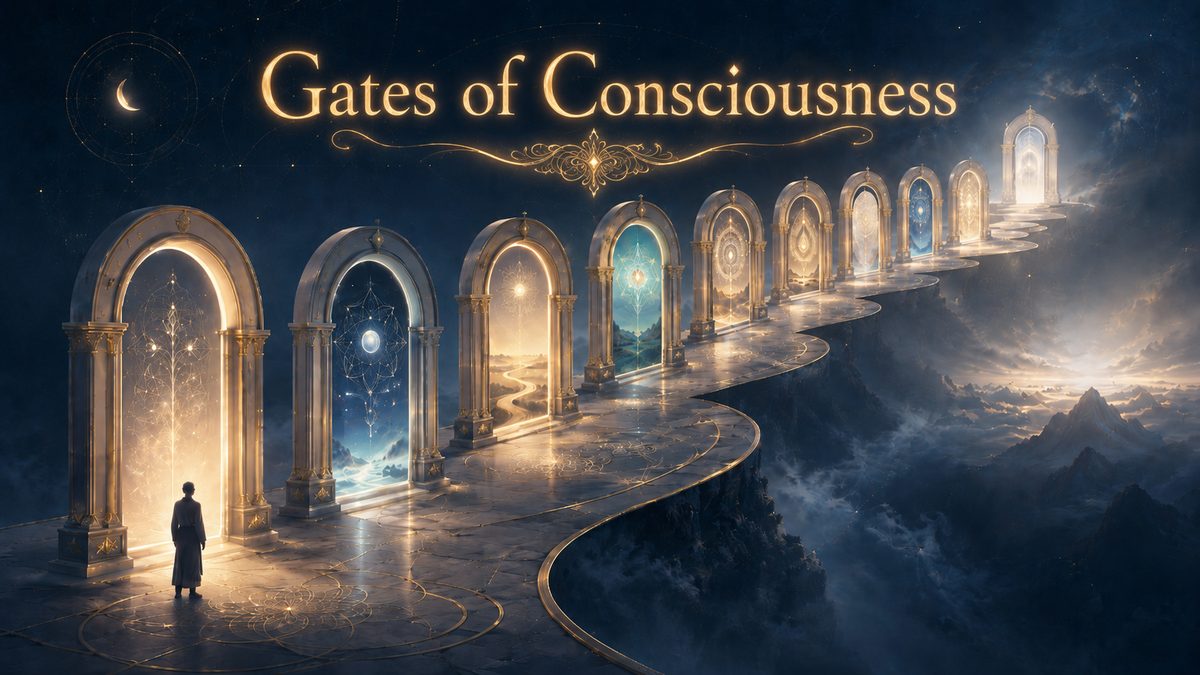
Gate Four. I Have Stability and Endurance
Author: Soheila Dadkhah
Abstract
The gate of “I Have Stability and Endurance” is the fourth stage in the architecture of the gates of awareness within the Seromi System. This gate explores the human capacity to sustain, stabilize, and continue what has been experienced, felt, and created in the previous gates. If the first gate returns the human being to existential presence, the second gate connects them with the field of emotions, and the third gate activates the power of creation, the fourth gate asks:
How does what you have created remain alive in your life?
Within this framework, stability does not mean rigidity, emotional dryness, excessive control, or resistance to change. Stability is the ability to remain on a conscious path even when the initial excitement fades, difficulties appear, fear becomes active, or the external world does not move in harmony with the inner rhythm of the individual. Endurance means building a real bridge between beginning and continuation, between inspiration and commitment, and between creation and responsibility.
The fourth gate shows that many human beings are able to begin, but are unable to sustain. They may receive inspiration, but cannot transform it into structure. They may make a decision, but when faced with the first pressure, doubt, or delay, they abandon the path. This article examines the cognitive, emotional, bodily, linguistic, and existential dimensions of the gate of “I Have Stability and Endurance” and shows how conscious stability can transform creation from a passing moment into a livable path.
Keywords
Gate of I Have Stability and Endurance, gates of awareness, Seromi System, endurance, inner stability, continuity, sustaining creation, self-awareness, emotional regulation, conscious commitment, psychological maturity, bodily stability, meaning, responsibility, human transformation
Introduction
After a human being is able to say “I Am,” then recognize their emotions, and then activate the power of creation, they encounter a very important stage:
Can I remain with what I have created?
In common understanding, beginning is often accompanied by excitement, hope, and energy. A person begins an idea, forms a relationship, starts a spiritual path, designs a project, makes a new decision, or experiences a new version of themselves. But beginning is only part of transformation. Many paths remain unfinished not because of a lack of inspiration, but because of a lack of stability.
In the Seromi System, the fourth gate has a foundational position, because every creation needs a vessel in order to stay alive. If creation is a spark, stability is the fire-holder. If creation is a seed, endurance is the soil, care, water, and time. Without this gate, the human being may begin again and again, but nothing takes root in their life.
Stability here does not mean blindly remaining on a wrong path. Conscious endurance is different from stubbornness. Sometimes continuing is a sign of maturity, and sometimes letting go is. The fourth gate teaches the human being to distinguish between escape, change, commitment, correction, and endurance.
The main question of this gate is:
Can I take root without turning off my flexibility?
Guiding Questions of the Article
This article is shaped around several central questions:
What does stability mean on the path of awareness?
What is the difference between conscious endurance and stubbornness or stagnation?
Why do human beings sometimes lose the ability to sustain what they have created?
What is the relationship between emotion, body, language, and stability?
How can fear, impatience, perfectionism, or the need for immediate results damage endurance?
Why does every creation need structure in order to remain alive?
How can a human being stay committed without losing freedom?
How does the gate of “I Have Stability and Endurance” move the human being from the excitement of beginning toward the maturity of continuation?
What “I Have Stability and Endurance” Does Not Mean
To understand this gate accurately, it is first necessary to clarify what stability does not mean.
Stability does not mean being stuck in a situation. A person who remains in an exhausted relationship, job, belief, or identity out of fear of change is not necessarily stable; they may simply be afraid of movement.
Stability does not mean complete control over life. No human being can control all conditions, reactions, timing, or outcomes. Conscious endurance is not control over the world; it is the ability to return to one’s own center in the midst of change.
Stability does not mean the absence of emotion. A stable person is not someone who never fears, never grieves, never feels anger, or never experiences doubt. A stable person is someone who can remain connected to their conscious path even while these emotions are present.
Stability also does not mean mechanical repetition. A person may repeat something every day while being inwardly absent. Conscious endurance means repetition with presence, reflection, meaning, and responsibility.
The meaning of this gate is more subtle:
I learn how to maintain my connection with my conscious path in the face of pressure, delay, fear, fatigue, and change.
Reactive Stability and Conscious Stability
The fourth gate distinguishes between two forms of endurance: reactive stability and conscious stability.
Reactive Stability
Reactive stability occurs when a person forces themselves to continue something that is no longer alive because they fear collapse, change, or the judgment of others. They remain, but not from presence; they remain from fear.
For example:
A person continues a relationship, not from love and growth, but from fear of loneliness.
Someone keeps a job, not from meaning, but from fear of failure.
A person repeats a spiritual path only to preserve their image in the eyes of others.
Someone continues a project because they do not want to admit that it needs correction.
A person calls themselves loyal, while in reality they are afraid of making a new choice.
In all these examples, there is a kind of endurance, but its source is not awareness; its source is fear.
Conscious Stability
Conscious stability begins when a person is able to see why they are staying on a path. Are they continuing because meaning, life, and growth are still present there? Or are they only afraid of letting go, changing, or being judged?
In conscious stability, the human being is committed to the path, but not blind. They continue, but they observe. They stay, but they listen. They make effort, but they do not sacrifice themselves to the path. When necessary, they correct. When necessary, they slow down. When necessary, they change the form of the path; but they do not lose the essence of presence, meaning, and responsibility.
The Difference Between Habit, Commitment, and Stability
The fourth gate distinguishes between three concepts: habit, commitment, and stability.
Habit
Habit means the repetition of a behavior. A habit can be useful, but it is not always conscious. A person may do something every day without knowing why they are doing it.
Commitment
Commitment means a conscious choice to remain with a path that carries meaning. Commitment is not merely repetition; it is a relationship with the path. Commitment asks: Why does this matter to me?
Stability
Stability is the ability to sustain commitment over time in the face of inner and outer changes. Stability is the vessel that transforms commitment from a momentary decision into a lived structure.
A person may have a habit but not be committed.
A person may commit but not have enough stability to continue.
A person may have stability, but without awareness, that stability may turn into dryness and lifeless repetition.
The fourth gate asks the human being to distinguish between these three levels.
The Root of Instability: Why Is Continuation Difficult?
Many human beings have a great deal of energy at the beginning of a path. Beginning is almost always accompanied by light, hope, and possibility. But after some time, reality appears. The work becomes difficult. Results are delayed. Others react. The body becomes tired. Old emotions return. The mind asks: Is this path worth it?
At this point, instability becomes active.
Instability may arise from different sources:
From fear of failure.
From fear of success.
From the need for immediate results.
From perfectionism.
From lack of structure.
From avoidance of responsibility.
From unfinished past experiences.
From lack of support.
From disconnection from the original meaning of the path.
From the belief that if something becomes difficult, it must be wrong.
The fourth gate reminds the human being that difficulty is not always a sign that the path is wrong. Sometimes difficulty means that the path is taking root.
The Cognitive Dimension of the Gate of “I Have Stability and Endurance”
In the cognitive dimension, the human being observes their patterns of instability.
They ask:
What do I usually begin and then abandon?
At what stage of the path does my motivation decrease?
When results do not appear quickly, what story does my mind create?
Do I see difficulty as failure or as part of growth?
Do I have structure for continuation, or do I rely only on initial excitement?
Which beliefs move me away from continuity?
Do I feel imprisoned by commitment?
Have I confused stability with limitation?
At this stage, the person realizes that instability is not simply laziness. Sometimes instability is the result of deep fears, old beliefs, unresolved experiences, or lack of skill in structuring life.
Cognition here is not for self-blame; it is for returning the power of choice.
The Emotional Dimension of the Gate of “I Have Stability and Endurance”
Stability is not possible without contact with emotions. Many human beings do not abandon a path because the path is wrong; they abandon it because they cannot tolerate the emotions that become active on the path.
Continuation may activate fear.
Growth may awaken old shame.
Being seen may create anxiety.
Waiting may bring impatience.
Commitment may activate the fear of limitation.
Approaching success may awaken fear of responsibility.
In this gate, the human being learns not to interpret difficult emotions as an immediate command to stop. Emotion is data; it is not the final authority. Fear may say: Be careful. But it does not necessarily say: Escape. Fatigue may say: Rest. But it does not necessarily say: Abandon. Doubt may say: Examine. But it does not necessarily say: Destroy the path.
Emotional stability means the ability to remain with inner experience without allowing every emotional wave to define the entire path.
The Bodily Dimension of Stability
The body is one of the most important fields of endurance. No path continues through a mental decision alone. The body must be able to tolerate the rhythm, pressure, rest, energy, and timing of the path.
Sometimes the mind is committed, but the body is exhausted.
Sometimes the goal is clear, but the nervous system is in a state of emergency.
Sometimes the person wants to continue, but the body sends signals of stopping through lack of sleep, pressure, poor nutrition, tension, or absence of rest.
The fourth gate reminds us that conscious endurance is connected with bodily care. A human being who ignores the body may move forward in the short term, but in the long term becomes depleted.
The body asks on the path of stability:
Is the rhythm of this path aligned with my capacity?
Is there balance between movement and rest?
Is my breath open or contracted on this path?
Does continuation come from presence or from pressure?
Does my body feel safe enough to stay?
Real stability is not built only in the mind; it must also settle in the body.
Language as a Tool of Stability
With language, the human being can either stabilize the path or collapse it. The sentences a person says to themselves during difficulty play an important role in continuing or abandoning.
When a person repeatedly says:
I never continue anything.
I failed again.
I am not a stable person.
If it becomes hard, it means it is not for me.
Others are moving faster than I am.
I must see results right now.
They are not merely expressing a momentary feeling; they are strengthening an identity of instability.
Conscious language does not deny the problem, but it does not erase the possibility of continuation.
Instead of “I never continue anything,” one can say:
I am learning the skill of continuity.
Instead of “If it becomes hard, it means it is wrong,” one can say:
Difficulty may be part of the stage of taking root.
Instead of “I failed,” one can say:
This stage needs review.
Instead of “I must see results quickly,” one can say:
Real growth needs time, care, and repetition.
The language of the fourth gate is the language of return. It is a language that shows the way back to the path after falling.
The Excitement of Beginning and the Maturity of Continuation
One of the common mistakes on the path of growth is confusing the excitement of beginning with the truth of the path. Beginning is usually bright, energetic, and motivating. But no excitement remains forever at the same intensity.
When excitement decreases, many human beings assume that the path has ended. In many cases, however, the path has only entered its real stage.
The fourth gate says:
Beginning may happen through inspiration, but continuation becomes possible through maturity.
The maturity of continuation means that the human being can remain with the path through meaning, order, care, and reflection even when the initial excitement has become quieter. This is the stage where creation becomes structure.
Perfectionism and Escape from Stability
Perfectionism is not only an obstacle to beginning; it is also an obstacle to continuation. A perfectionist may question the entire path when the result does not unfold in an ideal way.
Perfectionism says:
If you cannot continue perfectly, do not continue.
If every day is not excellent, you have failed.
If the path is slow, it is worthless.
If you make a mistake, your entire identity is in question.
The fourth gate challenges this view. Real endurance is not perfection. Endurance means return. It means knowing that sometimes one slows down, sometimes one makes mistakes, sometimes one becomes tired, sometimes the path needs correction; but these are not the end of the path.
A stable person is not someone who never falls.
A stable person is someone who has learned how to return to the path.
Stability and Flexibility
Endurance without flexibility becomes rigidity. Flexibility without stability becomes fragmentation. The fourth gate creates balance between these two.
Stability says:
I have meaning in this path.
Flexibility says:
I consciously adjust the form of the path.
Stability says:
I am not uprooted by every wave.
Flexibility says:
I do not become blind to new truth.
Stability says:
I continue.
Flexibility says:
I continue consciously.
This balance is one of the signs of inner maturity.
Structure: The Vessel of Endurance
Everything that is created needs structure in order to remain alive. Inspiration without structure is like water without a vessel. It may be beautiful and alive, but it spreads out and disappears.
Structure can take many forms:
A specific time for practice.
A specific rhythm for writing.
A clear boundary in a relationship.
A simple plan for caring for the body.
Human or professional support.
Recording progress.
Periodic review.
Determining priorities.
Removing draining factors.
Structure does not mean excessive rigidity. Structure means that the path can find a place in real life.
The fourth gate reminds us that good intention, without structure, often disappears under the pressure of daily life.
Stability in Relationship
The fourth gate is not only about projects, work, or an individual path. Relationship also needs stability.
In relationship, stability means reliable presence. It means that a person is not kind, honest, or committed only in easy moments. It means that they can remain present in conversation, conflict, vulnerability, and repair.
Stability in relationship does not mean remaining in an unhealthy relationship. It means the ability to create reliable presence in a relationship where growth, respect, and truth are possible.
Relational instability may appear as:
Coming close and suddenly withdrawing.
Making promises and not acting on them.
Expressing love without stable behavior.
Escaping conversation during conflict.
Constantly shifting between the roles of victim, rescuer, and attacker.
Relational stability means:
I become more reliable in my presence.
I see my emotions, but I do not discharge them onto the relationship in a harmful way.
Even in conflict, I do not disconnect from truth, respect, and responsibility.
Stability and Identity
The fourth gate gradually changes the identity of the human being. The individual moves from a fragmented and reactive identity toward a more stable one.
They no longer define themselves only through the state of the moment.
If they feel fear today, they do not say: I am a coward.
If they feel tired today, they do not say: My path is over.
If they move slowly today, they do not say: I have failed.
If they feel doubt today, they do not say: There is no truth.
A stable identity means that the human being can hold changing experiences within a wider field. Emotions change, but the center of the person does not completely move with every emotion.
At this stage, the inner sentence becomes:
I can be changeable without becoming disconnected from my center.
Signs That the Fourth Gate Is Becoming Active
The activation of this gate can be observed through several changes:
The person thinks about the structure of continuation after beginning.
They do not immediately interpret difficulty as failure.
They can distinguish between resting and abandoning.
Their inner language changes from self-blame to return.
When motivation decreases, they return to the original meaning and intention.
They move away from perfectionism and accept imperfect but living continuity.
They do not ignore the body on the path of endurance.
They become more reliable in relationships.
They do not see commitment as a prison; they see it as a vessel for growth.
They can correct the path without destroying themselves.
Possible Distortions in This Gate
The fourth gate, like every stage of awareness, can be distorted.
Stubbornness in the Name of Endurance
The person remains on a path that is no longer alive, healthy, or meaningful, but calls it loyalty or stability.
Control in the Name of Structure
The person clings so tightly to order and planning that flow, creativity, and life disappear from the path.
Burnout in the Name of Commitment
The person ignores the needs of the body, emotions, and psyche, and turns continuation into self-harm.
Dependency on Results
The person remains stable only as long as they see quick results. If results are delayed, they see the path as worthless.
Fear of Change
The person sees every correction or change of direction as failure, while sometimes real endurance requires redesign.
The balance of the fourth gate is this:
I remain, but I do not become blind.
I continue, but I do not exhaust myself.
I build structure, but I do not kill the flow.
The Relationship of the Fourth Gate with the Other Gates
The fourth gate stands on the foundation of the three previous gates.
Without “I Am,” stability may turn into an attempt to prove existence.
Without “I Feel,” endurance may become emotional suppression.
Without “I Create,” stability becomes an empty vessel with nothing flowing through it.
The fourth gate sustains creation. It gives creation depth, time, and roots. If the third gate says, “Something from me enters the world,” the fourth gate says, “I also have the capacity to care for it.”
This gate is an important preparation for the fifth gate, because after the human being has experienced presence, feeling, creation, and stability, they can see with greater clarity. Stability calms the field of observation. A person who is displaced in every moment by fear, excitement, or escape cannot see deeply. Stability opens the eye of awareness.
Conclusion
The gate of “I Have Stability and Endurance” brings the human being face to face with one of the most important needs of the path of transformation:
The ability to continue.
A human being does not change only by beginning. They truly change when they are able to hold a new choice long enough for it to become structure, behavior, identity, and life.
This gate does not say that one must always remain. It does not say that changing direction is failure. It does not say that difficult emotions must be ignored. Rather, it says that the human being can return to their conscious center in the midst of change, pressure, fear, fatigue, and delay, and decide from there.
I Have Stability and Endurance means:
I do not only begin; I care.
I do not only create; I sustain.
I do not only receive inspiration; I build structure.
I am not present only in the moment of excitement; I remain present on the path.
I can correct, rest, return, and continue.
Ultimately, the message of this gate is:
I take root without disconnecting from the flow of life.
I remain stable without turning into stone.
I sustain what I have consciously created with presence, care, and responsibility.
Common Questions About the Fourth Gate of Awareness
Question One: What is the fourth gate of awareness about?
The fourth gate of awareness is about stability, endurance, and the ability to continue on a conscious path. This gate helps the human being, after experiencing presence, feeling, and creation, to sustain, revise, and deepen what they have begun over time. In this view, growth does not happen only through beginning; growth becomes stable when the person can repeat, care for, and stabilize a new choice in real life.
Question Two: Does stability mean not changing?
Stability does not mean not changing. Conscious stability means that a human being can maintain connection with their center, meaning, and primary path in the midst of external and internal changes. A stable person may change the form of the path, reduce the speed, or adjust the method, but they do not destroy the path from fear, confusion, or momentary reaction.
Question Three: What is the difference between endurance and stubbornness?
Endurance comes from awareness, meaning, and commitment. Stubbornness comes from fear, pride, or the inability to hear a new reality. A stable person can review and revise, but a stubborn person only repeats. Endurance is alive and connected with growth; stubbornness is rigid and often leads to exhaustion, resistance, and the closing of awareness.
Question Four: Why is continuing harder than beginning?
Beginning is usually accompanied by excitement, hope, and initial energy, but continuation requires structure, patience, emotional regulation, bodily care, and a repeated return to meaning. Research on habit formation shows that new behaviors need repetition in relatively stable contexts in order to become more automatic, and the time required for habit formation varies greatly across individuals and behaviors.
Question Five: Is fatigue a sign of instability?
Fatigue is not always a sign of instability. Sometimes fatigue is the body’s message asking for rest, rhythm adjustment, or a review of how one is moving. Instability occurs when a person cannot distinguish between the need for rest and the desire to escape the path. The fourth gate does not ask the human being to push endlessly; it asks them to remain aware, care for themselves, and then continue.
Question Six: How is this gate connected with commitment?
In this gate, commitment does not mean forcing oneself or becoming imprisoned. Commitment means knowing what is valuable and being able to move in the direction of those values, even when difficult emotions are present. In acceptance and commitment therapy, committed action and movement toward values are important elements of psychological flexibility.
Question Seven: What is the role of structure in the fourth gate?
Structure is the vessel of endurance. Good intention without structure may disappear under the pressure of daily life. Structure may include a specific time, a small habit, an achievable plan, a supportive environment, progress tracking, or an inner contract. Research on implementation intentions shows that specifying when, where, and how a behavior will be performed can increase the likelihood of goal achievement.
Question Eight: Is perseverance always enough?
Perseverance is important, but it is not enough by itself. Research on grit defines it as perseverance and passion for long-term goals, yet the same body of research also shows that grit explains only part of the variation in successful outcomes. Therefore, in the Seromi System, endurance must not become blind pressure. Healthy stability requires meaning, a healthy body, flexibility, support, and reflection.
Question Nine: How is this gate connected with motivation?
The fourth gate helps the human being move motivation from a temporary emotional state into a deeper and more sustainable form. Self-determination theory distinguishes between intrinsic and extrinsic motivation and shows that autonomy, competence, and relatedness can strengthen motivation and persistence.
Question Ten: What is a simple daily practice for the fourth gate?
At the end of each day, pause for a few minutes and ask:
Which part of my path needed care today?
Where did I want to abandon the path because of fatigue, fear, or impatience?
What small action can reconnect me with my path?
Then choose only one small movement; something realistic and possible. The fourth gate is not activated through grand and dramatic actions. It takes root through small returns, conscious repetitions, and daily care.
English References
Duckworth, A. L., Peterson, C., Matthews, M. D., and Kelly, D. R. Grit: Perseverance and Passion for Long-Term Goals. Journal of Personality and Social Psychology, two thousand seven.
Gollwitzer, P. M., and Sheeran, P. Implementation Intentions and Goal Achievement: A Meta-Analysis of Effects and Processes. Advances in Experimental Social Psychology, two thousand six.
Lally, P., van Jaarsveld, C. H. M., Potts, H. W. W., and Wardle, J. How Are Habits Formed: Modelling Habit Formation in the Real World. European Journal of Social Psychology, two thousand ten.
Gardner, B., Lally, P., and Wardle, J. Making Health Habitual: The Psychology of Habit Formation and General Practice. British Journal of General Practice, two thousand twelve.
Hayes, S. C., Strosahl, K. D., and Wilson, K. G. Acceptance and Commitment Therapy: The Process and Practice of Mindful Change. Guilford Press, second edition, two thousand eleven.
Arch, J. J., and colleagues. Acceptance and Commitment Therapy Processes and Mediation. Behaviour Research and Therapy, two thousand twenty-two.
Ryan, R. M., and Deci, E. L. Self-Determination Theory and the Facilitation of Intrinsic Motivation, Social Development, and Well-Being. American Psychologist, two thousand.
Ryan, R. M., and Deci, E. L. Intrinsic and Extrinsic Motivation from a Self-Determination Theory Perspective: Definitions, Theory, Practices, and Future Directions. Contemporary Educational Psychology, two thousand twenty.
Baumeister, R. F., Vohs, K. D., and Tice, D. M. The Strength Model of Self-Control. Current Directions in Psychological Science, two thousand seven.
Dweck, C. S. Mindset: The New Psychology of Success. Random House, two thousand six.
A Psychological and Social Analysis of the Nine Gates of
Gate Nine. I Live My Presence Author: Soheila Dadkhah Abstract
Gate Eight. I Love Myself Author: Soheila Dadkhah Abstract The