
NLP
Human Needs and Their Viruses.Part3
Part Three: Reconstructing Distorted Needs Using NLP Plus Techniques Author:
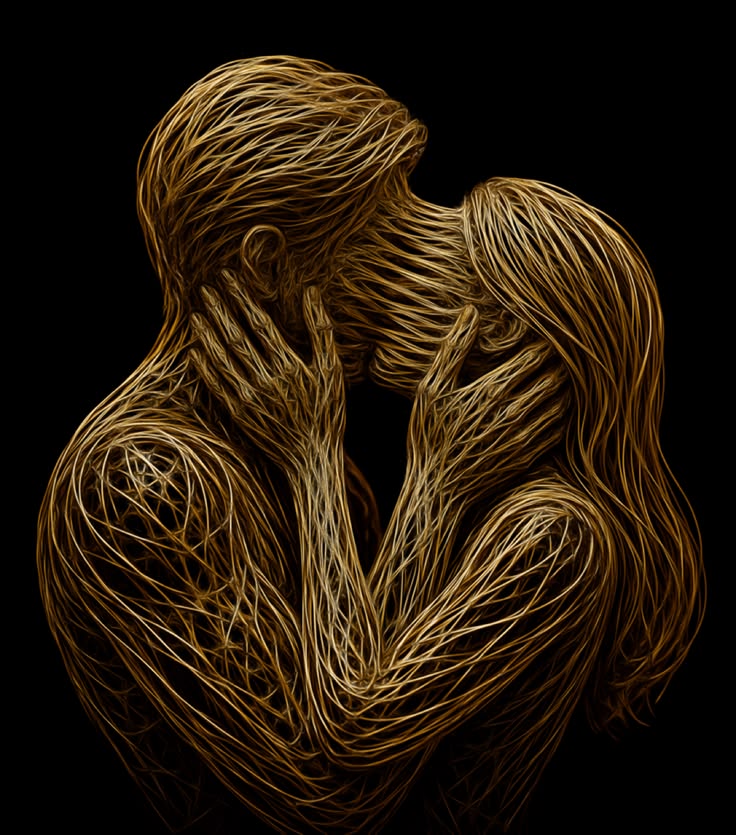
What Happens in the Brain When We Fall in Love?
Author: Soheila Dadkhah
Article Headings
Is Love an Illusion or Reality? Part Two: What Happens in the Brain When We Fall in Love?
Core Sentence of the Article
Abstract
Introduction: Love Does Not Happen Only in the Heart; It Also Happens in the Brain and Body
How Does the Brain in Love Work?
The Brain’s Reward System: Why Does the Presence of the Beloved Become Rewarding?
The Role of Dopamine: Desire, Anticipation, and Focus on the Beloved
Oxytocin and Vasopressin: Bonding, Closeness, and the Sense of Belonging
Love, Anxiety, and Cortisol: Why Do Some Loves Not Bring Peace?
Why Is a Strong Bodily Reaction Not Always a Sign of Real Love?
What Signs Does the Body Show in Healthy Love?
The Difference Between Biological Love, Infatuation, and Dependency
Is Love Only Brain Chemistry?
Summary
Key Questions for the Reader
Suggested English References
Core Sentence of the Article
Love is experienced as real in the body and brain, but not every intense bodily reaction is necessarily a sign of real, healthy, or mature love.
Abstract
Love is one of the experiences that human beings live through both in the mind and in meaning, as well as in the body and brain. When a person falls in love, it is not merely a poetic feeling or a moral decision that forms within them. The nervous system, the brain, hormones, the reward system, the body, attention, memory, and even patterns of sleep and appetite may also be affected. For this reason, love cannot be dismissed as mere illusion. Romantic experience truly occurs in the body and can involve the brain in desire, motivation, focus, attachment, anticipation, pleasure, anxiety, and the urge for closeness.
However, the biological reality of this reaction does not mean that every intense bodily experience is real love. The body can react strongly to love, sexual desire, infatuation, fear of loss, ambiguity, an unsafe relationship, intermittent reward, old wounds, and attachment anxiety. Therefore, if a person’s heart beats faster when they see someone, if they lose focus, become restless, or think about that person constantly, we cannot conclude based only on these signs that they are experiencing mature love.
These signs tell us that the body and brain have been activated, but we must still ask: Does this activation come from safety or anxiety? From real knowledge or a mental image? From an actual relationship, or from unavailability and ambiguity?
This article is the second part of the series “Is Love an Illusion or Reality?” In the first part, we examined the structure of love in human beings from biological, social, historical, relational, ethical, and meaning-based perspectives. In this article, the focus is on the biological layer of love: what happens in the brain and body when we fall in love. The aim of this article is to show that love is biologically real, but biology alone is not enough to identify healthy love.
The body can signal the beginning of the experience of love, but the quality of the relationship determines whether this experience becomes real love or remains at the level of infatuation, desire, anxiety, and dependency.
Introduction: Love Does Not Happen Only in the Heart; It Also Happens in the Brain and Body
In everyday language, we often say, “My heart has fallen in love,” “I miss them,” or “I love them with all my being.” This language is poetic and deeply human. But if we look more carefully, love does not happen only in the “heart.” The brain, nervous system, body, hormones, memory, attention, and bodily sensations also participate in romantic experience. When someone becomes important to us, their presence or absence can affect our focus, energy, sleep, appetite, heartbeat, imagination, motivation, and even decision-making. This means that love is not merely a mental or cultural concept; it leaves real traces in the body.
But we must be careful here. The fact that love occurs in the brain and body does not make it meaningless, mechanical, or less valuable. Some people, when they hear that love is related to hormones, dopamine, oxytocin, or the reward system, quickly conclude that love is only brain chemistry and has no deeper meaning. This is an oversimplification. Seeing, hearing, music, faith, art, and grief are also processed in the brain, but none of them can be reduced only to brain activity. Love, too, cannot be experienced without the brain, but it is not only the brain. Biology is the ground of the experience, but it is not the whole meaning.
On the other hand, we should not conclude from the reality of bodily reaction that every intense reaction is a sign of real love. Our body does not respond only to love; it also responds to danger, excitement, novelty, desire, ambiguity, anxiety, and old memories. A person may feel a racing heart and restlessness beside someone and assume that this means deep love, while their body may actually be experiencing insecurity, fear of rejection, sexual attraction, or the activation of an old wound.
So the main question of this article is not, “Does the body play a role in love?” The answer is clear: yes, it does. The deeper question is: What exactly is the body experiencing, and how are we interpreting it?
How Does the Brain in Love Work?
When a person enters a romantic experience, their brain usually becomes involved in several important processes: focused attention, reward, motivation, desire, memory, imagination, and sometimes anxiety. The person may notice that their mind keeps returning to one particular individual. That person’s message becomes especially important, seeing them creates energy, their voice has a different effect, and even remembering a shared memory can create a bodily sensation. This condition shows that the brain has registered that person as an important and rewarding stimulus.
In the early stages of love, attention usually becomes selective. This means that among countless pieces of information, the person notices and highlights signs related to the beloved more than anything else. A simple sentence, a glance, a short message, or even a few hours of silence may take on great meaning. In this state, the brain does not merely receive information; it turns it into a meaningful experience. This is exactly where love becomes connected to the mental map, because the brain interprets the other person’s behavior through past experiences, hopes, fears, and needs.
The brain in love sometimes acts like a brain that has discovered something extremely valuable and wants to move closer to it. This closeness may be emotional, bodily, mental, or even imaginary. A person may not yet have built a real and stable relationship, but their brain may already be activated by image, possibility, and anticipation. This is why early love can sometimes feel extremely powerful, even when real knowledge is still limited. Understanding how the brain in love works helps us understand why the beginning of love can feel like a storm, but to recognize real love, the storm alone is not enough.
The Brain’s Reward System: Why Does the Presence of the Beloved Become Rewarding?
One of the most important parts of romantic experience is the activation of the brain’s reward system. In simple terms, the reward system is a network of brain processes related to pleasure, motivation, anticipation, pursuit, and valuation. When something becomes important, pleasurable, or valuable to us, the brain tends to move toward it again. In love, the presence, message, gaze, voice, touch, or even the imagination of the beloved can become rewarding for the brain. This is why a person in love may experience a clear shift in their body and emotions when they see that person’s name on their phone screen.
This reward-like quality is a natural part of the formation of affection. If the brain did not receive any reward from moving closer to another person, motivation for bonding, care, attention, and continuation of the relationship would not form. But the problem begins when the reward system becomes activated without safety and real knowledge. In other words, instead of experiencing a healthy, stable, and trustworthy relationship, the person becomes attached to the excitement of receiving attention, messages, looks, or short-term signs. In this state, instead of calming down within the relationship, the brain becomes trapped in a cycle of waiting for and receiving reward.
This issue appears more often in ambiguous and unstable relationships. When the other person is sometimes very warm and close, and at other times cold, distant, or unclear, the reward system may become even more engaged. The person does not know when they will receive attention, so they wait more, think more, and become more involved. This cycle can feel very similar to intense love, but it may have more to do with intermittent reward, ambiguity, and anxiety. Therefore, the rewarding quality of someone’s presence is an important sign, but we must still ask: Is this reward happening in a safe and mutual relationship, or in an ambiguous and exhausting one?
The Role of Dopamine: Desire, Anticipation, and Focus on the Beloved
Dopamine is commonly associated with reward, motivation, desire, seeking, and anticipation. In romantic experience, especially in the early stages, a person may feel more energetic, less tired, constantly think about the next meeting, reread messages several times, or remain restless while waiting for a sign of attention. These states may be connected to the activation of systems related to motivation and reward. This is why early love can sometimes feel like “coming alive,” as if the world has gained new color, sound, and meaning.
But dopamine is not activated only in healthy love. The same mechanism may also play a role in infatuation, thrill-seeking, ambiguous relationships, and dependency on intermittent reward. When something is unavailable, scarce, or uncertain, the mind may become more preoccupied with it. A person who is not always available or clear may appear more attractive to the reward system, not necessarily because the love is more real, but because anticipation, ambiguity, and the possibility of receiving reward keep the brain activated. Here, the intensity of desire can be confused with the actual quality of the relationship.
Therefore, dopamine can ignite the fire of early love, but it cannot build the house of relationship by itself. Desire matters, but if it is not accompanied by knowledge, respect, safety, and communication, it may keep the person stuck in the stage of pursuit. In mature love, desire should gradually be accompanied by calmness, trust, responsibility, and realism. If a relationship is built only on anticipation, excitement, unavailability, and extreme ups and downs, the person may call an experience “love” while it is being fed more by the reward system and anxiety than by a healthy bond.
Oxytocin and Vasopressin: Bonding, Closeness, and the Sense of Belonging
Alongside the reward system, hormones and neuropeptides such as oxytocin and vasopressin have been studied in relation to bonding, trust, closeness, and social behavior. Oxytocin is often associated with touch, childbirth, breastfeeding, closeness, social bonding, and certain experiences of trust and calmness. Vasopressin has also been examined in some studies related to pair bonding and attachment behaviors. Of course, we should not oversimplify these substances and say, for example, that oxytocin is simply “the love hormone” and explains everything. The human body is far more complex than such labels.
Emotional and bodily closeness can create a sense of bonding. When two people move closer to each other with safety, consent, care, and respect, the body may register this closeness as calming and belonging. Safe touch, a kind gaze, honest conversation, and reliable presence can regulate the nervous system and strengthen the feeling of “I am not alone.” This part of love is very important, because human beings do not need only excitement; they also need bonding and safety.
But here, too, we must be precise. The body may feel bonded after physical or emotional closeness, even when the relationship is not psychologically healthy. Sometimes a person feels attached to someone because they have shared closeness, touch, sexual intimacy, or intimate moments, while at the relational level there is not enough respect, stability, honesty, or safety. In this situation, the body has experienced bonding, but the relationship is still not trustworthy. Therefore, the feeling of closeness is real, but it must be examined within the context of the relationship.
The important question is: Has this bond formed in a safe, mutual, and respectful relationship, or in an ambiguous, unequal, and harmful one?
Love, Anxiety, and Cortisol: Why Do Some Loves Not Bring Peace?
Love is not always experienced only through peace. At the beginning of a relationship, novelty, the importance of the other person, the possibility of rejection, ambiguity, and emotional sensitivity can create a natural form of anxiety. A person may feel excited before a meeting, restless while waiting for a message, or think a lot about the other person’s feelings. This amount of anxiety in the early stages can be part of the awakening of the emotional system. But when anxiety becomes constant, intense, exhausting, and accompanied by losing oneself, we can no longer call it only romantic excitement.
Cortisol is commonly associated with the body’s stress response. When a relationship is experienced as unsafe, ambiguous, or threatening, the body may enter a state of alertness. This state may be accompanied by insomnia, increased or decreased appetite, heart palpitations, muscle tension, obsessive thinking, sensitivity to messages, and an inability to calm down. The person may think, “Because I am this restless, I must be deeply in love,” but from a more careful perspective, the body may actually be reporting insecurity. Not every restlessness is love; sometimes the body is saying that the relationship is not predictable or safe for the nervous system.
The difference between living love and an anxious relationship is that healthy love, even when it contains excitement, eventually allows regulation and calmness as well. In other words, beside the other person, the individual does not only become activated and restless; they can breathe, be their real self, speak, express needs, and return to repair after conflict. But in an unsafe relationship, the body remains constantly in a state of threat. The person has to guess, monitor, regulate themselves, predict the other person’s reactions, and fear abandonment. Here, we must honestly ask: Has this love awakened my body, or has it kept my body in a state of anxiety?
Why Is a Strong Bodily Reaction Not Always a Sign of Real Love?
One of the biggest misunderstandings about love is that we equate the intensity of bodily reaction with the truth of love. A person may say, “When I see them, my hands and feet shake,” “When they do not message me, I cannot calm down,” “No one unsettles me the way they do,” or “My body only reacts to them, so it must be real love.” These experiences are real, but they require careful interpretation. The body may react strongly, but the reason behind this intensity is not always mature love.
The body reacts strongly to several things: sexual attraction, novelty, scarcity, ambiguity, fear of loss, danger, intermittent reward, projection of a mental image, and the activation of old wounds. For example, if a person experienced rejection or emotional instability in childhood, they may later be drawn to someone who repeats the same pattern of closeness and distance. In such a relationship, the body becomes strongly activated because an old attachment map has been turned on again. The person may call it love, but perhaps part of it is an unconscious attempt to resolve an old wound.
For this reason, intensity must be examined through quality. We must ask: Does this intensity come from safety or insecurity? From knowing the person or from ambiguity? From seeing the real person or from a mental image? From a mutual relationship or from trying to obtain someone distant and unavailable? If the intensity of feeling causes the person to lose themselves, forget their boundaries, remain constantly anxious, or justify harmful behavior, the meaning of that intensity must be reconsidered. Real love can be deep, but depth does not always mean chaos and collapse.
What Signs Does the Body Show in Healthy Love?
To avoid turning this article into only a warning, we must also ask what the body experiences in healthy love. Healthy love does not merely excite the body; it also makes the body feel somewhat safer in the presence of the other person. When a relationship is healthier, the person may feel that beside the other person they can breathe more easily, play fewer roles, keep their body less defended, and show their real self more comfortably. This calmness does not mean the absence of passion; it means the presence of safety alongside passion.
In healthy love, the body is not only waiting for reward; it also has the possibility of regulation. This means that the other person’s presence does not merely create addiction to messages, looks, or attention, but also calms the nervous system. After a meeting or conversation, the person does not only become more dependent and restless; they may feel clearer, calmer, and more real. Healthy love usually reduces the feeling of “I must prove myself so they will stay” and strengthens the experience of “I can be seen and still remain respected.”
Of course, no healthy relationship is always calm and without tension. Disagreement, misunderstanding, distance, and hurt can occur in any relationship. But the difference is that in a healthy relationship, the body knows there is a way back to safety. Conflict is not the end of the world. Silence is not always rejection. Expressing a need is not dangerous. Setting a boundary does not automatically mean losing the relationship. Therefore, one biological sign of healthy love is that the body in the relationship does not merely become alive and awake; over time, it learns to trust, regulate itself, and create more space for authentic presence.
The Difference Between Biological Love, Infatuation, and Dependency
To understand romantic experience more accurately, we must distinguish between early biological love, infatuation, and dependency.
Early biological love is usually accompanied by activation of the body, attention, desire, reward, attraction, and closeness. At this stage, the person may experience a great deal of energy, see the other person as highly significant, and feel a desire to repeat meetings or communication. This stage can be natural and even beautiful, but it is still not enough to identify mature love. At this stage, real knowledge is not yet complete, and the brain may fill much of the experience with imagination, hope, and projection.
Infatuation occurs when the person is more involved with image, excitement, idealization, and novelty than with the reality of the other person. In infatuation, the person may ignore signs of incompatibility, disrespect, lack of responsibility, or important differences. The mind mostly sees what it wants to see. In this state, the other person is sometimes seen not as a whole human being, but as a dreamlike answer to the person’s needs and desires. Infatuation can be very passionate, but if it does not face reality, knowledge, and responsibility, it usually collapses or turns into an unhealthy relationship.
Dependency becomes prominent when the person feels worthless, unsafe, collapsed, or unable to continue life without the other person. In dependency, the hidden sentence is not, “I love you and I choose you,” but rather, “Without you, I cannot hold myself together.” Dependency may be confused with love because it has high intensity, but its intensity comes more from fear than from freedom. Mature love begins when body, desire, and attachment become accompanied by knowledge, respect, choice, boundaries, responsibility, and the possibility of being oneself.
Is Love Only Brain Chemistry?
The short answer is: no.
Love cannot be experienced without the brain and body, but it is not only brain chemistry. The brain provides the ground for romantic experience, just as the ear and nervous system make it possible to hear music. But music is not only the movement of the eardrum or the activity of neurons. Music has meaning, structure, experience, memory, and connection. Love is the same. The body and brain are the instruments of love, but the quality of the relationship, meaning, ethics, choice, and responsibility create its music.
If we reduce love only to chemistry, the danger is that we may ignore responsibility in the relationship. We may say, “I cannot help it,” “My body wants it,” “My brain is involved,” or “This attraction is stronger than me.” It is true that the body and brain are very powerful, but human beings are not merely biological reactions. We have the capacity to observe, choose, regulate ourselves, communicate, set boundaries, create meaning, and take responsibility. These capacities transform human love from a raw reaction into a mature experience.
On the other hand, if we ignore biology, we make love too mental or too moral and remove the body from the experience. This is also a mistake. Healthy love must listen to the body as well. If the body is constantly tense, anxious, restless, or shut down in a relationship, this is important data. If the body experiences safety, warmth, desire, calmness, and the possibility of breathing in the presence of another person, this is also important data.
Therefore, the precise position is this: The brain makes love possible, but the quality of the relationship determines whether this experience makes us more mature or more dependent.
Summary
In this article, we saw that love is not merely a poetic, cultural, or imaginary idea; it also occurs in the body and brain. During romantic experience, the reward system, attention, motivation, desire, attachment, hormones, and nervous system become involved. Therefore, love is biologically real and can affect sleep, appetite, focus, energy, the body, and behavior. But the reality of the bodily experience does not mean that every intense reaction is a sign of healthy or mature love.
The body can respond to love, but it can also respond to desire, anxiety, old wounds, unsafe relationships, ambiguity, unavailability, and intermittent reward. For this reason, a racing heart, restlessness, constant thinking, or intense desire should be examined rather than immediately accepted as proof of real love. The important question is not, “Does my body react?” but rather, “Where does this reaction come from, and where is it leading me?”
Healthy love does not only awaken the body; it also makes the body feel safer in the presence of the other person. Mature love must gradually move beyond early desire and become accompanied by knowledge, respect, boundaries, dialogue, responsibility, and meaning. The body can signal the beginning of love, but only the quality of the relationship reveals whether this experience becomes real love or remains at the level of infatuation, desire, and dependency.
Key Questions for the Reader
When I think about them, does my body feel only excitement, or does it also feel safety?
If your experience is only restlessness, anxiety, waiting, and a racing heart, you need to look more carefully. Healthy love can include excitement, but alongside it there should also be signs of safety, respect, and the possibility of being yourself.
Does their presence make me calmer and more real, or more anxious and dependent?
In a healthy relationship, the body usually gains the possibility of regulation over time. If the relationship constantly makes you restless, worthless, waiting, dependent, or lost, perhaps what you are experiencing is not only love.
Does the intensity of my feeling come from knowing them, or from ambiguity and unavailability?
Sometimes we do not become more in love because of real knowledge; we become more involved because of uncertainty, hot-and-cold behavior, distance, and the possibility of loss.
After contact with them, do I find myself more, or do I lose myself more?
Healthy love usually helps a person see themselves more clearly. Dependency and unsafe relationships usually distance a person from themselves.
Is my body experiencing love, or attachment anxiety?
If there is fear of abandonment, a constant need for reassurance, extreme sensitivity to messages, and an inability to calm down, a wounded attachment system may have been activated.
Does this relationship activate only my reward system, or does it also calm my security system?
If the relationship gives only excitement and anticipation but lacks safety, stability, respect, and dialogue, you may be more involved with the reward cycle than with mature love. Understanding and distinguishing between these two is important.
Suggested English References
Aron, A., Fisher, H. E., Mashek, D. J., Strong, G., Li, H., & Brown, L. L. (2005). Reward, motivation, and emotion systems associated with early-stage intense romantic love. Journal of Neurophysiology, 94(1), 327–337.
Bartz, J. A., & Hollander, E. (2006). The neuroscience of affiliation: Forging links between basic and clinical research on neuropeptides and social behavior. Hormones and Behavior, 50(4), 518–528.
Carter, C. S. (1998). Neuroendocrine perspectives on social attachment and love. Psychoneuroendocrinology, 23(8), 779–818.
Damasio, A. R. (1994). Descartes’ Error: Emotion, Reason, and the Human Brain. Putnam.
Fisher, H. E. (2004). Why We Love: The Nature and Chemistry of Romantic Love. Henry Holt.
Fisher, H. E., Aron, A., & Brown, L. L. (2006). Romantic love: A mammalian brain system for mate choice. Philosophical Transactions of the Royal Society B: Biological Sciences, 361(1476), 2173–2186.
Hazan, C., & Shaver, P. (1987). Romantic love conceptualized as an attachment process. Journal of Personality and Social Psychology, 52(3), 511–524.
Insel, T. R. (2010). The challenge of translation in social neuroscience: A review of oxytocin, vasopressin, and affiliative behavior. Neuron, 65(6), 768–779.
LeDoux, J. E. (1996). The Emotional Brain: The Mysterious Underpinnings of Emotional Life. Simon & Schuster.
Panksepp, J. (1998). Affective Neuroscience: The Foundations of Human and Animal Emotions. Oxford University Press.
Young, L. J., & Wang, Z. (2004). The neurobiology of pair bonding. Nature Neuroscience, 7, 1048–1054.
Part Three: Reconstructing Distorted Needs Using NLP Plus Techniques Author:
Part One: Defining Natural Human Needs Author: Soheila Dadkhah Abstract